Looking for Brick Slips for facade systems?
Visit our dedicated website.
Looking for Brick Slips for facade systems?
Visit our dedicated website.
Many properties in the UK are built using clay bricks and when you’re planning an extension or renovation, it goes without saying you’ll want the new brickwork to match the old.
You want bricks that blend unnoticeably from the originals, so no one would ever know the property used to be different.
Ever driven past a building which has been extended using bricks that clearly don’t match? You’ve probably thought ‘I wouldn’t have chosen those!’ That’s exactly what we want to avoid.
So let’s find bricks that match. Sounds simple enough, right?
Well, unfortunately, it’s not always straightforward.
You need to identify the existing bricks, know what to look for and understand the occasions when you need help from an experienced professional.
The goal of this guide is to teach you this – we’re not here to gatekeep. We want you to feel knowledgeable in your brick decisions, so we’ll run through what to check yourself, how to get a close match, and when you’ll need expert help.
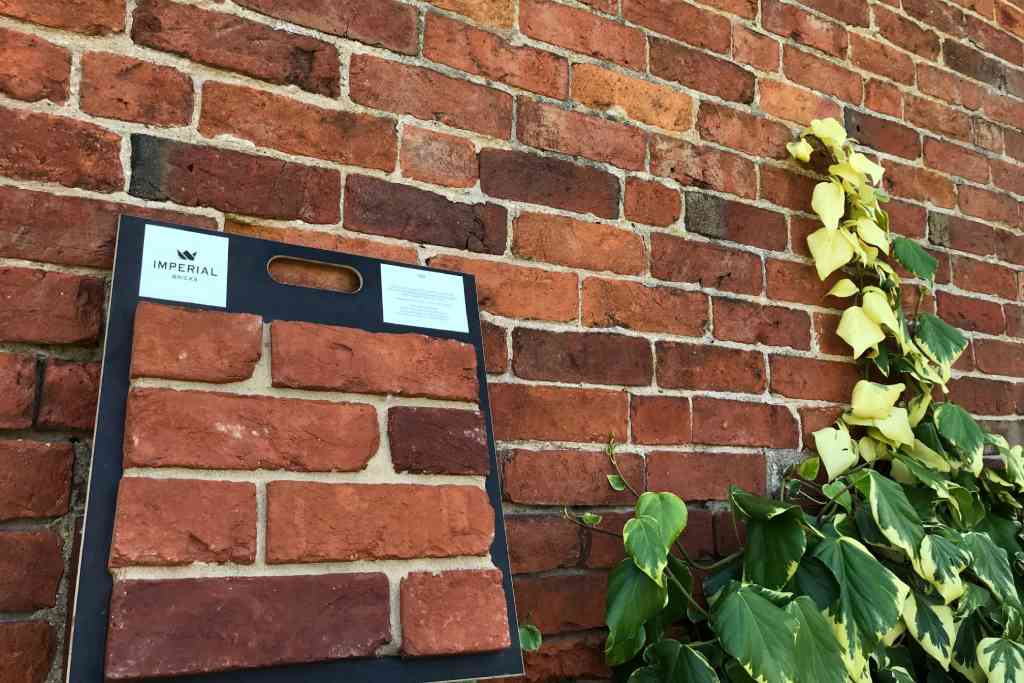
For the majority of extensions and renovations with a brickwork exterior, you need bricks that match.
There can be exceptions. For example, planning authorities may require period property extensions to look different from, but in-keeping with, the original building to preserve its historic features.
But for most projects, a seamless match is the goal.
There are three main details you need to know about your existing bricks to identify them: size, colour and type/texture.
We’ll guide you through each of these, but before we get into it, we want to issue a warning…
⚠️ You DO NOT need to take a brick out of your existing wall to identify or match it ⚠️
It may seem obvious that you shouldn’t run outside with a chisel and hammer and start chipping away at brickwork, but we’ve seen a few recommendations online telling you to do this.
Unless an original wall has fallen down and you want to grab a few bricks, for the love of all things brickwork, leave the wall alone.
Firstly, you need to look at more than one brick for a successful match. Secondly, chances are you aren’t a contractor who knows how to do it safely.
Now we’ve gotten that out of our system, let’s delve in.
To match bricks for extensions and renovations you first need to know the size of the bricks used in the original brickwork.
To accurately measure your brick size, grab your measuring tape and find a corner of the existing brickwork.
You’re going to measure the length, width and height of a few bricks in millimetres.
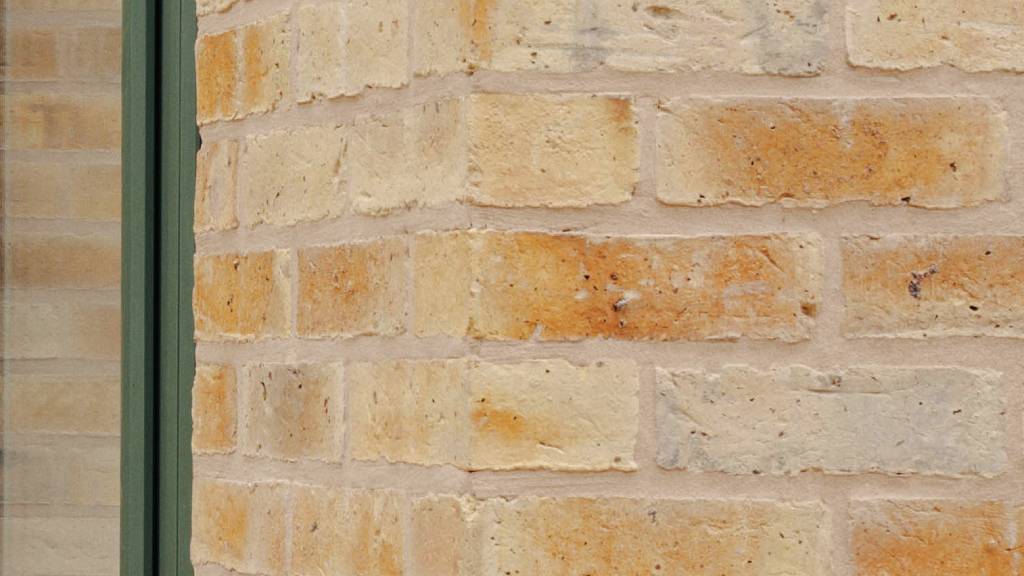
Measuring bricks on a corner ensures you get the width (sometimes called depth) measurement, not just the length.
Now you have your measurements, you need to check whether they’re imperial or metric.
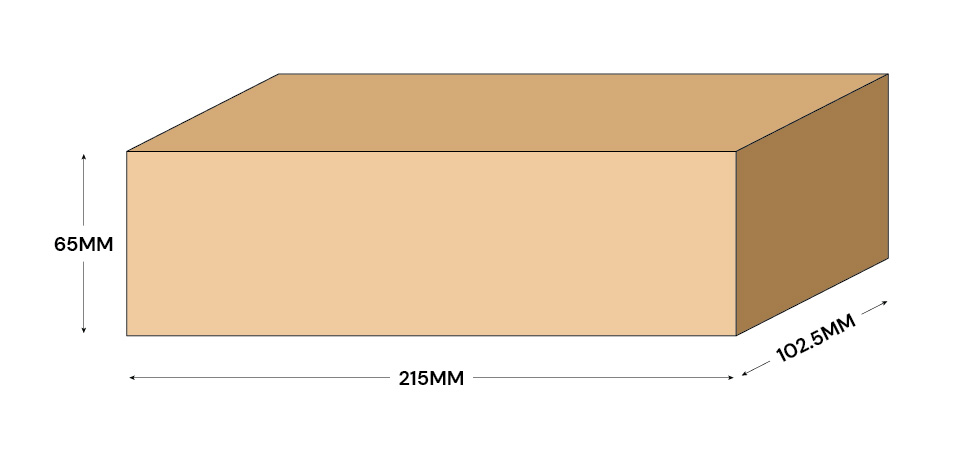
If the property was built after the 1970’s, the bricks are likely to be the standard metric size of 215 102.5 x 65mm.
If you have an older property, or a size which doesn’t match metric, it’s known as imperial size.
Imperial bricks can be a variety of sizes, but are often larger than metric.
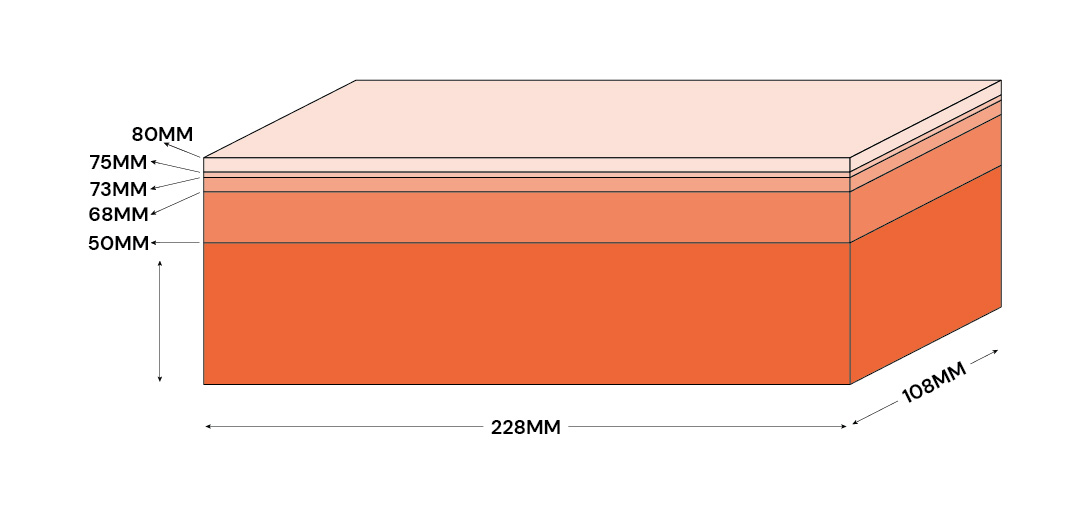
Traditionally, they were measured in inches instead of millimetres, but it’s helpful to know both. Here’s an imperial brick size reference table so you don’t need to convert the measurements yourself.
Occasionally, you may find that the length of the existing bricks is a lot bigger than metric and typical imperial sizes. This indicates that you have linear bricks.
Pro Tip: Make sure you measure at least 3 bricks. Bricks have a size tolerance and can differ by a few millimetres, especially if they’re handmade (we’ll get to that later). If you find they’re slightly different sizes, note down the measurements of 5-10 bricks and take the average, this should give you an accurate size to work with.
Though slight size deviations can sometimes be accommodated, it’s no use finding perfect looking bricks in the wrong size. The wrong size can lead to misaligned mortar joints which can stand out just as much as using the wrong colour.
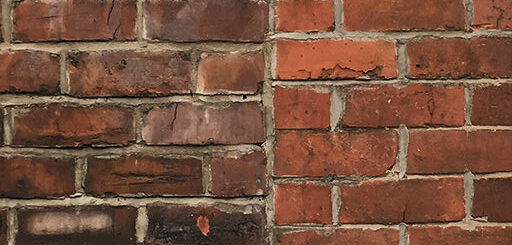
This can and does happen, so make sure you’re measuring accurately.
On the face of it, matching brick colour is simple. You can easily identify whether bricks are red, orange, yellow, brown etc.
However, there are a couple of things you need to be aware of – lighting, colour blends, shade variations and weathering.
When identifying bricks you need to be aware of the lighting you’re viewing them in.
Lighting makes a big difference to the appearance of brick colours. Bricks can look completely different indoors vs outdoors, and at different times of the day.
If you look at bricks in direct sunlight, they’re going to look warmer, with more of an orange or yellow tone to them.
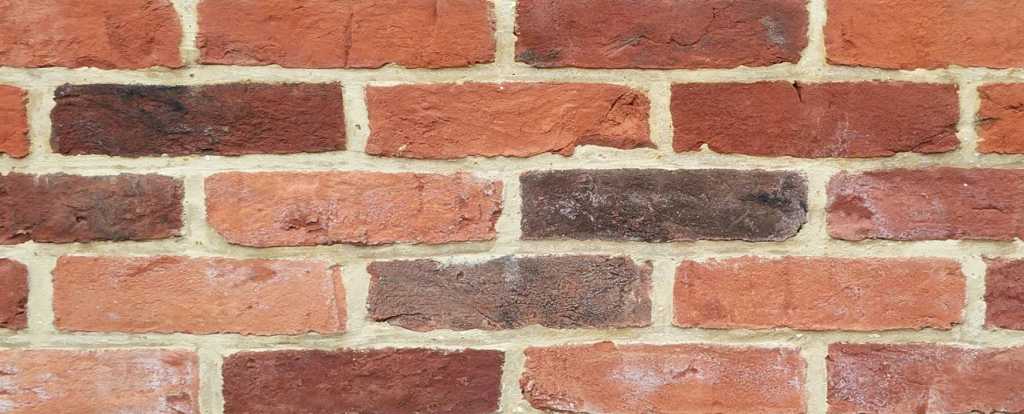
If you look at them in the shade, or nearer the end of the day when you’re losing daylight, the bricks will look cooler with a blue or purple tone to them.
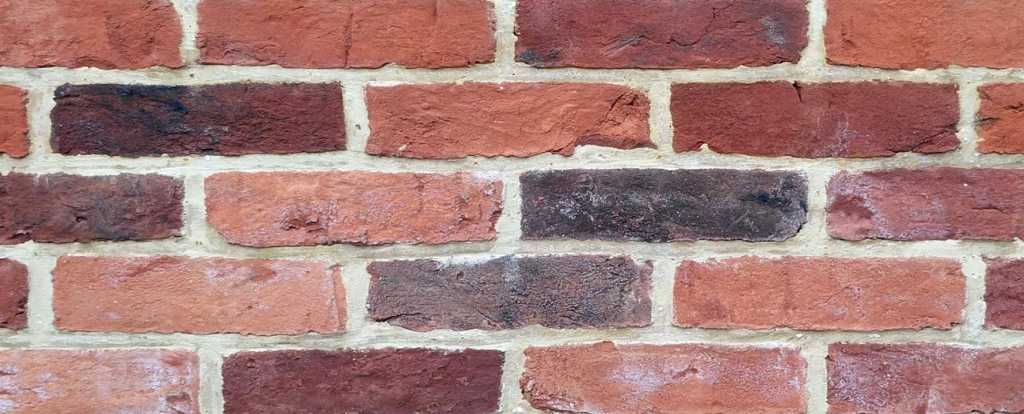
To get an accurate representation, try to look at the bricks in natural daylight when the sun isn’t out. Not a hard thing to achieve in England with our glorious weather…
If you’re taking photos for reference, adjust your exposure and/or brightness so the colours on the screen match what you can see in front of you.
It’s easy to identify the base colour of bricks, but you need to be aware of colour blends and shade variations.
A colour blend is where different colour bricks, or shades of the same colour bricks, are mixed together to create a variation in the overall look of the finished brickwork.
Colour Blend Example:
Our Camberley Blend is created by intentionally mixing red and orange bricks.
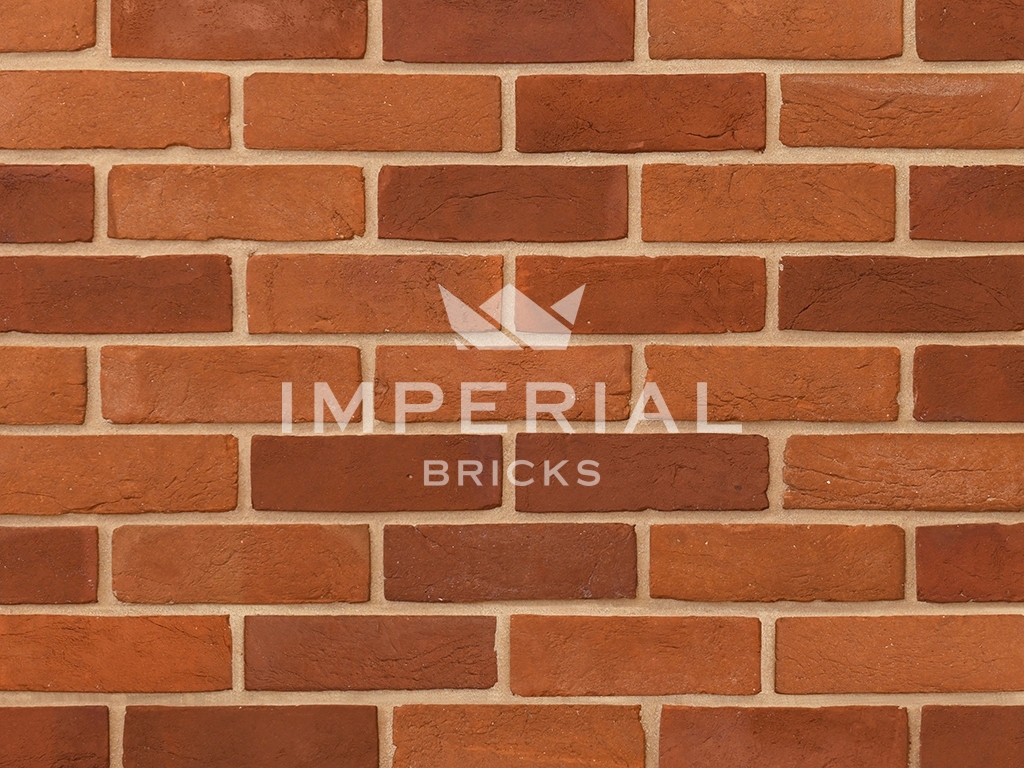
It’s common to see a base colour brick mixed with another colour in varying percentages.
If the brickwork you’re matching has different colours, the easiest way for you to identify a rough percentage is to take a photo of roughly a metre square section, then count how many bricks there are of each colour. To speed this up, take a photo and ask AI to do it for you!
This isn’t an exact science as bricklayers don’t lay the bricks in exact percentages, but it will give you an idea of what to look for when it comes to searching for a match.
Depending on the type of bricks you need to match, they may have variations in the colour.
Natural shade variations are subtle differences in the shades of colour within each individual brick.
Unlike intentional colour blends, shade variations occur during firing as a result of the way bricks are stacked in the kiln and temperature fluctuations. This doesn’t mean they aren’t intentional (many are), it just means different colours weren’t intentionally mixed in a pack.
Shade Variation Example:
Our Soft Red bricks have natural variances of colour within each brick, which gives them a characterful look compared to bricks with a single-tone colour.
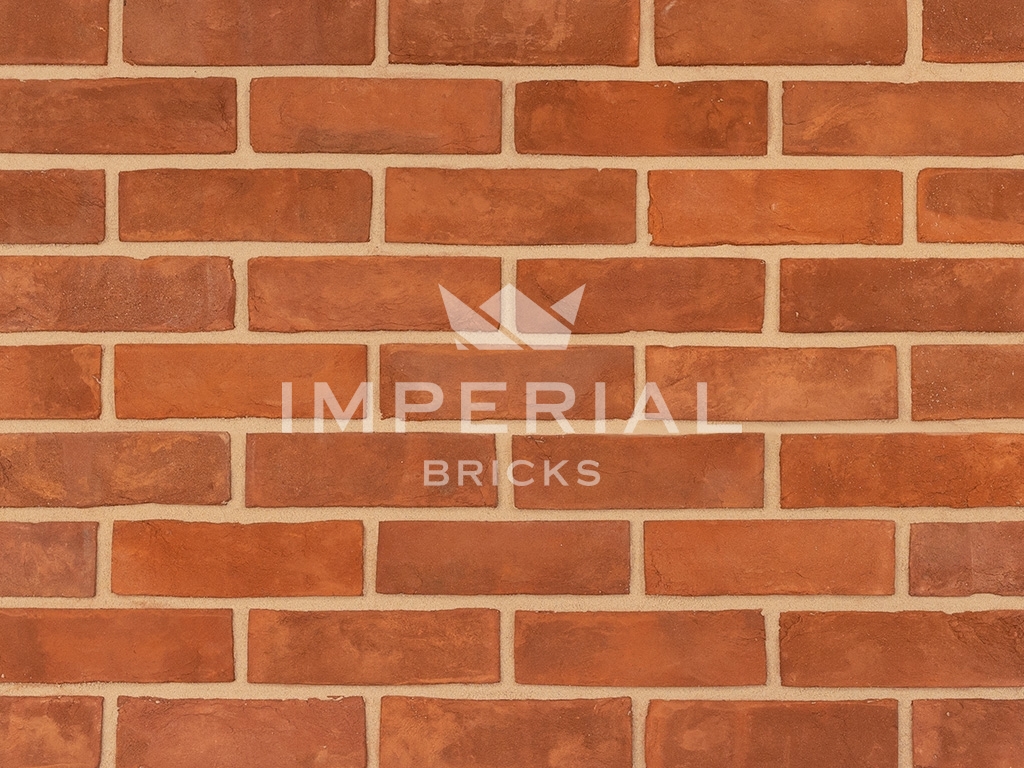
If your brickwork has colour variations, it’s best to take a few photos to refer to when you’re ready to search for bricks.
Bricks weather naturally where brickwork has been exposed to environmental elements for extended periods of time.
It makes bricks look darker or even ‘dirty.’ You tend to see this on garden walls and buildings in built-up cities and towns.
Typically, the older the brickwork is you need to match, the more likely it is to show effects of weathering. This is especially true for more porous bricks like handmades.
Brick Weathering Example:
The original bricks shown below were new yellow handmades. They are heavily weathered to show the effects of pollution and exposure to weather over a long period of time.
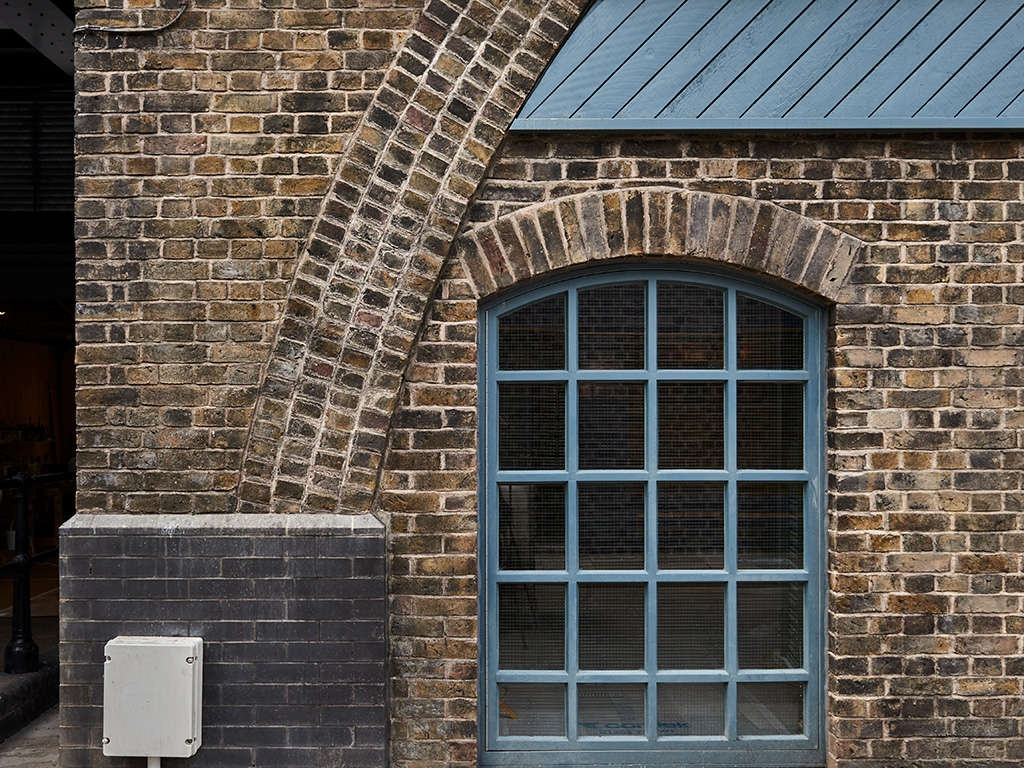
You can easily spot if your brickwork has weathering on the faces. If it has, take a couple of photos and note down how light or dark it looks so you know what to look for.
There are three main types of facing bricks – handmade, extruded and pressed. They all have typical characteristics and textures which are key to identifying them.
We’ll run through these so you know what to look for.
As the name suggests, handmade bricks are made by hand. Clay is hand thrown into a mould which gives them their creased texture.
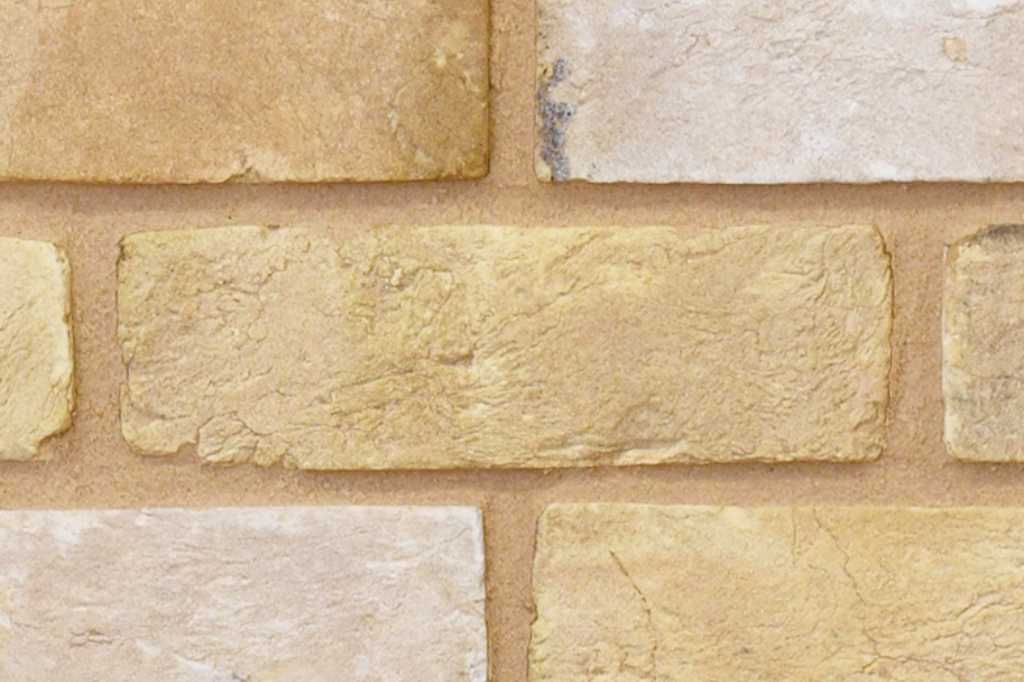
The creasing can be fine or very pronounced, and the edges are rough which gives them a characterful look.
Pro Tip: Handmade bricks are the most likely to have size variations. When checking size make sure you measure several bricks and take the average.
Extruded bricks are made by forcing prepared clay through a brick-shape die to produce a clay column, it’s then cut with wires to produce individual bricks.
This creates a smooth face with a ‘drag’ texture on the top and bottom of the brick. You can’t see much of this texture when looking at a wall, but there may be telltale signs around the edges – straight but a little rough.
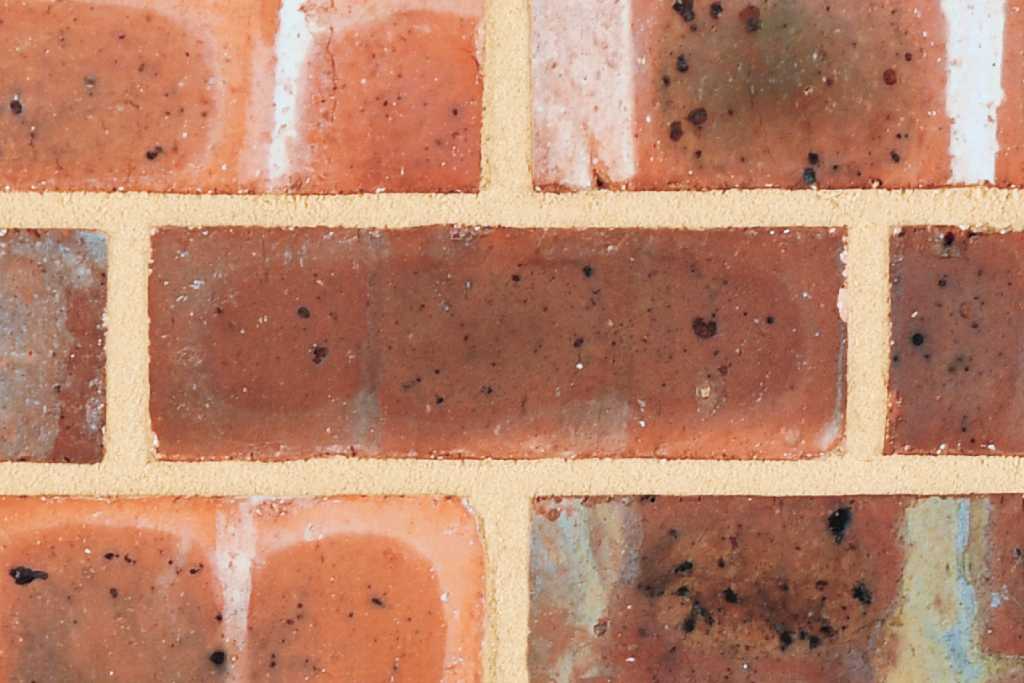
To make this more complex, some manufacturers add texture to the face of their bricks.
The way to spot them is to look for the straight-but-slightly-rough edges and a texture that doesn’t look handmade.
Pro Tip: In terms of production, extruded bricks are the most cost effective to manufacture in large volumes, so if they’re not handmade, there’s a good chance they’re extruded.
Pressed bricks are machine made and produced by pressing clay into brick moulds under high pressure. This produces very clean, straight and sharp edges so they’re easy to spot.
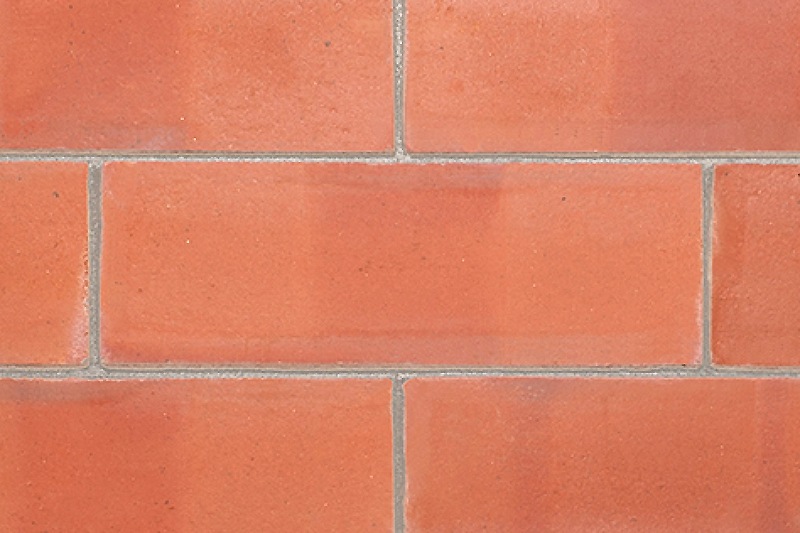
The brick face is often smooth and they tend to have a uniform appearance.
Pro Tip: Pressed bricks are often used in more formal or urban architecture designs. If your property has very clean, uniform brickwork, the bricks are likely to be pressed.
Brick bonds and mortar colours don’t matter too much when you’re identifying bricks, but it’s something you should be aware of as they affect the look of the finished brickwork.
There are several different brick bonds, ranging from the typical modern stretcher bond to the more traditional flemish bond.
Take a look at this guide on different brick bonds used in the UK and note down which one matches your brickwork.
There are different mortar types and colours available which we won’t get into here, but you need to be aware that mortar colour will affect the appearance of brick colour(s).
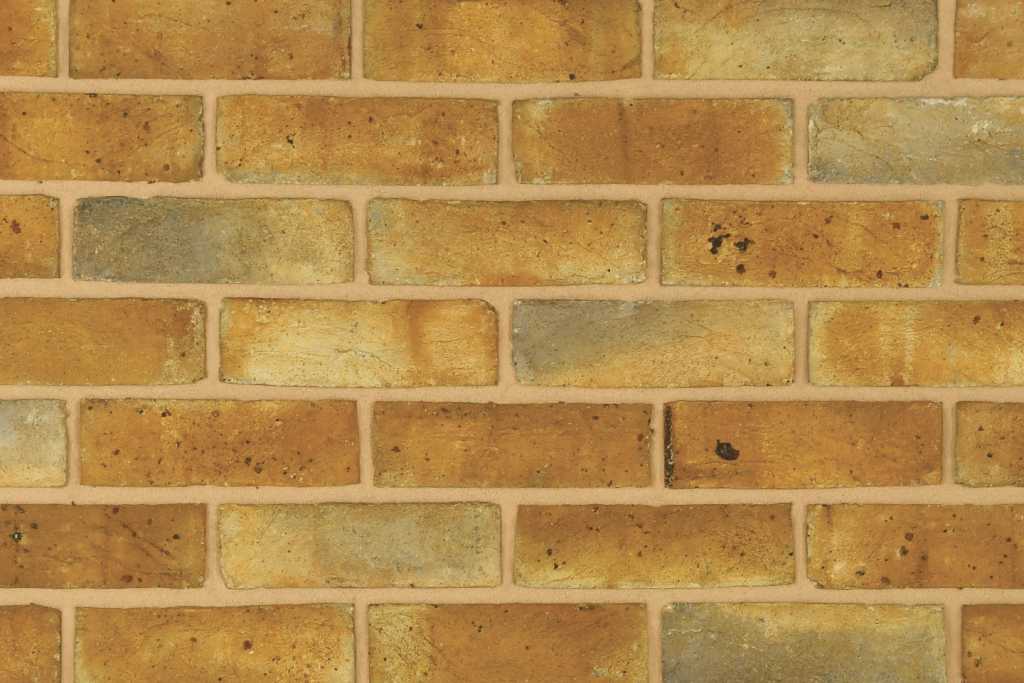
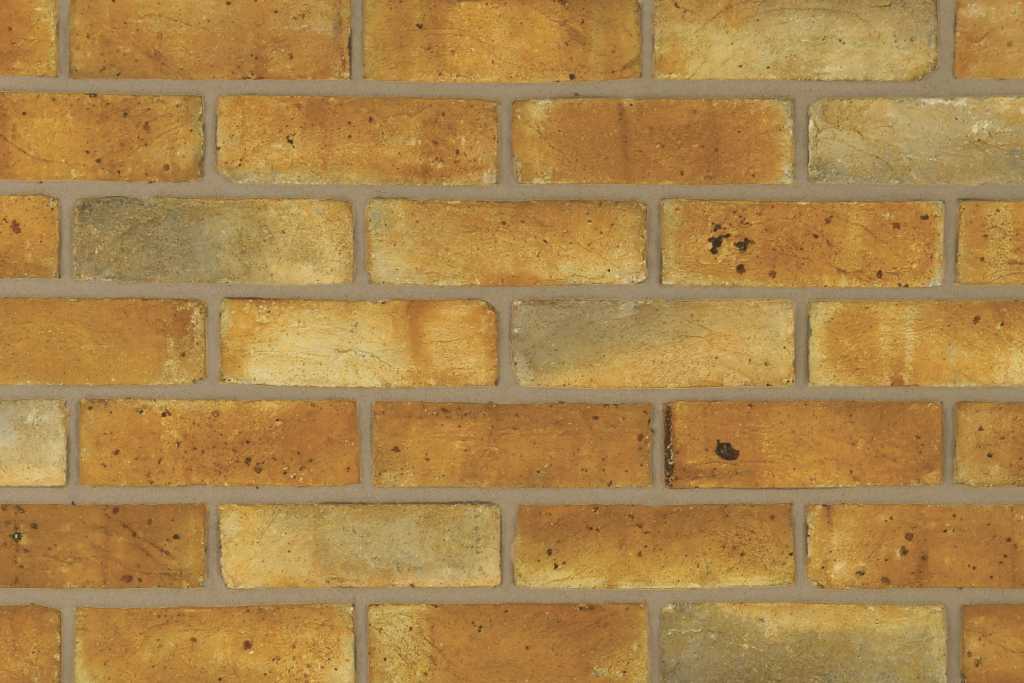
For example, a light, buff colour mortar will accentuate brick colours, whereas a darker, grey tone mortar will suppress the brighter brick colours once laid.
Example of a lighter, buff colour mortar:
Examples of a darker, grey colour mortar:
You don’t need to worry about this too much as your bricklayer or contractor will usually match this for you, but be aware when looking at online images or sample panel boards that the mortar they’ve used may not be the same as yours.
For this reason, we always recommend obtaining samples and even building a small sample panel wall in-front of your existing brickwork before committing to a large order.
So you have your brick size, type and base colour. You also know whether the bricks you’re matching have a colour blend, natural shade variations and if they’re weathered.
You can now search for bricks online using popular keywords, think ‘weathered red bricks’ or ‘country style handmade bricks’ for example. You can also try an image search with the photos you took earlier and you should find some decent matches to consider.
If the existing bricks are standard in colour(s) and texture, the next step is to order a few samples and get matching.
But what if that doesn’t work and you can’t find anything close? There could be a few reasons for this.
Remember the natural weathering we talked about, where we told you to note down how dark you think it looks and take a few photos?
Unfortunately, natural weathering is very difficult to match with an off-the-shelf option.
It’s often uneven – different areas or sides of a building can have darker or lighter weathering depending on how exposed they are.
You can see darker weathered bricks on the front of a building for example, and lighter around the side where it’s more sheltered by a neighbouring property. This makes matching without custom finishes difficult.
You may have searched for your bricks online and found a name for them. They could be a popular brick from a large well-known manufacturer, but that doesn’t mean they’re still in production.
This is especially true for pre-1970’s properties; many of the old manufacturers don’t exist anymore.
What do you do now?
Well some suppliers offer alternatives for the big-name bricks. You may find options by searching the brick name online, followed by the word ‘alternative.’
If that doesn’t work?
You have two options to consider – you can look for reclaimed bricks similar to your existing ones, or you can get professional help to match them.
If you’re not sure which route to consider, take a look at this old style bricks vs reclaimed brick guide where we discuss the pros and cons of each option.
The idea of a brick matching app sounds appealing – upload a photo of your wall and it’ll match similar bricks for you.
In theory, it sounds like a helpful, fast way of helping you match your bricks, but the reality is, they aren’t reliable. We should know, we used to have one.
The problem is matching algorithms are no substitute for human experience and knowledge. An app can highlight similar bricks, but it does not know which finishing processes can be applied and how those processes will react with one another to achieve the perfect match you need.
By the time your ordered samples from the ‘matched’ bricks arrive and you realise they don’t match in real-life, you could have already spoken with a professional and either got an accurate match, or be well on the way to a custom solution.
Apps can waste both yours and the manufacturer’s time, when a skilled human could have perfectly matched your bricks in a fraction of the time.
Unless you have standard bricks with little to no colour variation or character, the easiest way to get a perfect match to your existing brickwork is to contact a supplier who offers a brick matching service.
You’ll still need to measure your existing bricks and take clear photos of the brickwork in natural daylight, but from there you hand it all over to the professionals, sit back, and let them do the work.
Although you can find matches online for some bricks, as soon as you have colour blends, shade variations, weathering and ageing to consider, it becomes more complex.
With thousands of different bricks to choose from, not all will fit your brick budget, so letting someone who lives and breathes bricks take over is a smart choice.
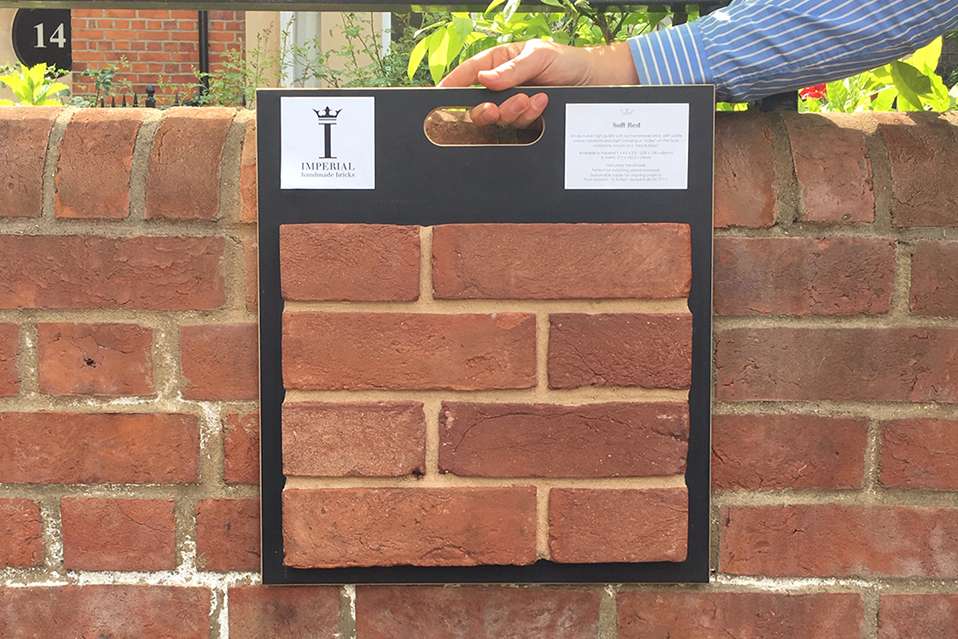
When there isn’t an off-the-shelf match available, they’ll know what processing options to apply to similar bricks to get that perfect match. These include custom colour blending, bespoke weathering, tumbling and ageing techniques.
Many suppliers (including us) offer the service for free, all with the aim of making the process easier for you.
To give you an idea of what can be achieved with a professional brick matching service, here’s a few case study examples.
The Malthouse
A derelict building was restored and repurposed into an award-winning arts centre. The brick match was a tricky one due to inconsistent levels of weathering across the brickwork. We worked with the architects through several rounds of sampling to ensure a close match to the original bricks.
Canterbury Cathedral
When the new Visitor Centre was planned for Canterbury Cathedral, the planning restrictions were understandably strict due to its heritage. A custom blend of two of our buff handmade bricks was approved as the most sympathetic match to the cathedral itself.
If you’ve enlisted professional help, the brick matching process should take a few days for an off-the-shelf match and 1-2 weeks for a custom match.
If the bricks are difficult to match from images alone, the supplier might want to send someone to visit the site in person to get an accurate match, which can extend lead time a little.
There are a few common mistakes we see from people who want to match their own bricks. If you prefer this route, here’s a few things to be aware of:
DO NOT place an order for the full quantity of your bricks without ordering samples first and comparing them next to the brickwork you want to match.
Different screens have different colour calibrations, so although all manufacturers and suppliers will match the online image colour as closely as they can to their actual bricks, it doesn’t mean you’re seeing them in the same way.
Images are never a substitute for seeing bricks in real life.
If your existing bricks are still in production, don’t go excitedly ordering the full quantity you need without seeing samples.
Clay is a natural product and there will be small variances in colour from batch to batch, even if you place two orders a few months apart.
To avoid this, make sure you order for the full quantity of bricks you need in one go.
If you aren’t sure of the quantity you need, our brick calculator can help you.
Naturally weathered brickwork is often easy to see, especially on old buildings, but make sure you check all the walls of the building.
You could have light weathering on one side of the building, and much darker on another depending on the direction they’re facing and how exposed they are.
If you find you have different levels of weathering, don’t try to match this yourself. Go straight to contacting a reputable supplier who can match the bricks and tailor the brick weathering for you.
As we mentioned earlier, mortar colour can drastically impact the look of bricks once they’re laid. Make sure your contractor is using the same colour mortar used in the original brickwork.
If you’re unsure, get them to build a square metre (1m²) sample panel in front of the existing wall with the new bricks and mortar to check.
Ordering 60 sample bricks now is far cheaper than realising halfway through your renovation that the bricks don’t match.
Throughout this guide we’ve armed you with all the tips to help you find the perfect brick match for an extension or renovation.
Here’s a quick recap of when you can match bricks yourself, and when professional help is required.
Match bricks yourself if the original brickwork:
Use a brick matching service if the original brickwork:
Brick matching can seem daunting and complex, but with the right approach you’ll have a perfect brick match which is indistinguishable from the original brickwork.
If you’d like to start searching for yourself and need to match older style, traditional bricks, browse our full brick range.
Alternatively, if you want to skip the stress of the brick hunt, you can take advantage of our free brick matching service. Just take some clear photos of your brickwork, measure the brick size and send them to us via our online form. We’ll be in touch asap.