Looking for Brick Slips for facade systems?
Visit our dedicated website.
Looking for Brick Slips for facade systems?
Visit our dedicated website.
England is known for its rich heritage, history and traditions. There are many locations throughout the country which are, quite literally, built on the appeal of tradition.
Look around many of the quaint towns and villages and you’ll find an abundance of buildings built with traditional, often handmade, brickwork.
Heritage brickwork – weathered, worn and a little rough around the edges – is often the desirable look for new house builders, particularly in smaller towns and villages away from the cities.
So many people love the ‘look’ of this history, it’s no surprise they’re drawn to recreate it for their residential homes.
For most, the immediate path to recreating traditional brickwork is to buy reclaimed bricks. Makes sense right? Use something old to create something new.
However, sourcing and using reclaimed bricks can have its limitations. Issues such as supply and brick matching can make the process difficult. To combat this, many people are now turning towards using new, reclaimed-style bricks.
If you’re exploring the option of using reclaimed bricks, this guide gives you an honest review and compares the benefits and challenges of both genuine reclaimed and reclamation (old-style) bricks to help your decision making.
Genuine reclaimed bricks are those that have been salvaged from a building demolition.
When a brick building is demolished, contractors will attend the site to sort the bricks. They’ll be checked for quality, cleaned, and packed onto pallets ready for resale.
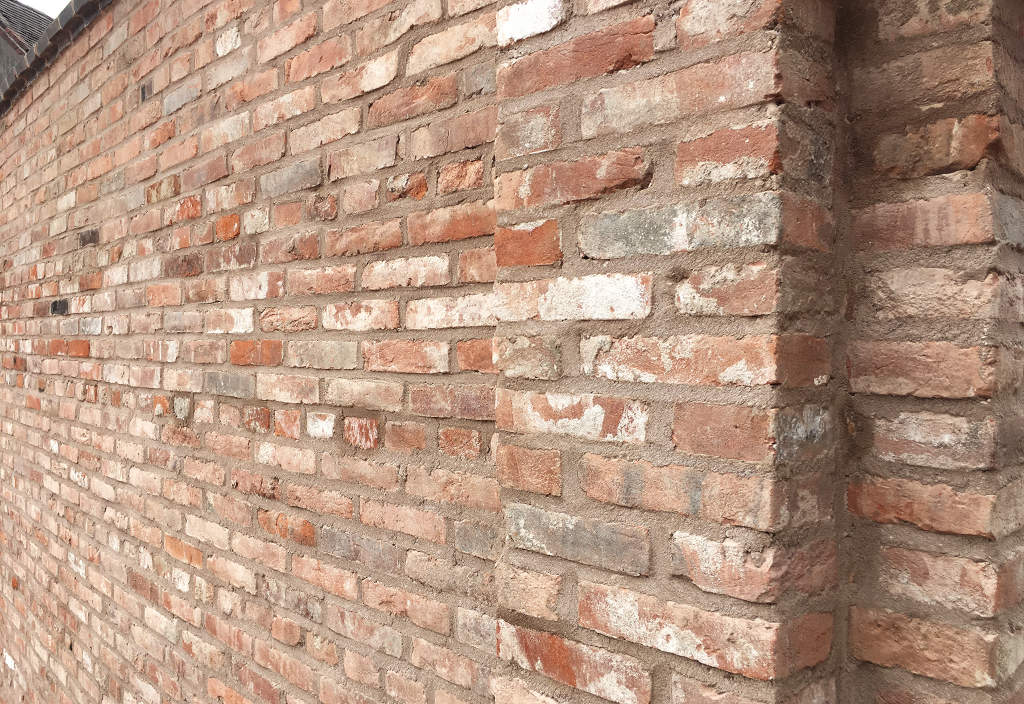
Example showing the wall of a new build home, built using genuine reclaimed bricks.
Reclaimed bricks can be handmade, extruded or pressed and will fetch varying prices depending on their condition and size.
Often, they’ll be imperial size with roughened edges from the demolition process. They can have varying levels of naturally sustained weathering on the faces, depending on how exposed or sheltered the original area of brickwork was.
Sometimes you’ll see some painted faces too (usually white or black), from where brickwork was painted internally or where render/paint has been cleaned from the outer face.
Reclamation, or old-style bricks, are new bricks that have been purposely made to look like old reclaimed bricks.
After they come out of the kiln, new bricks can undergo a variety of finishing processes to make them look old.
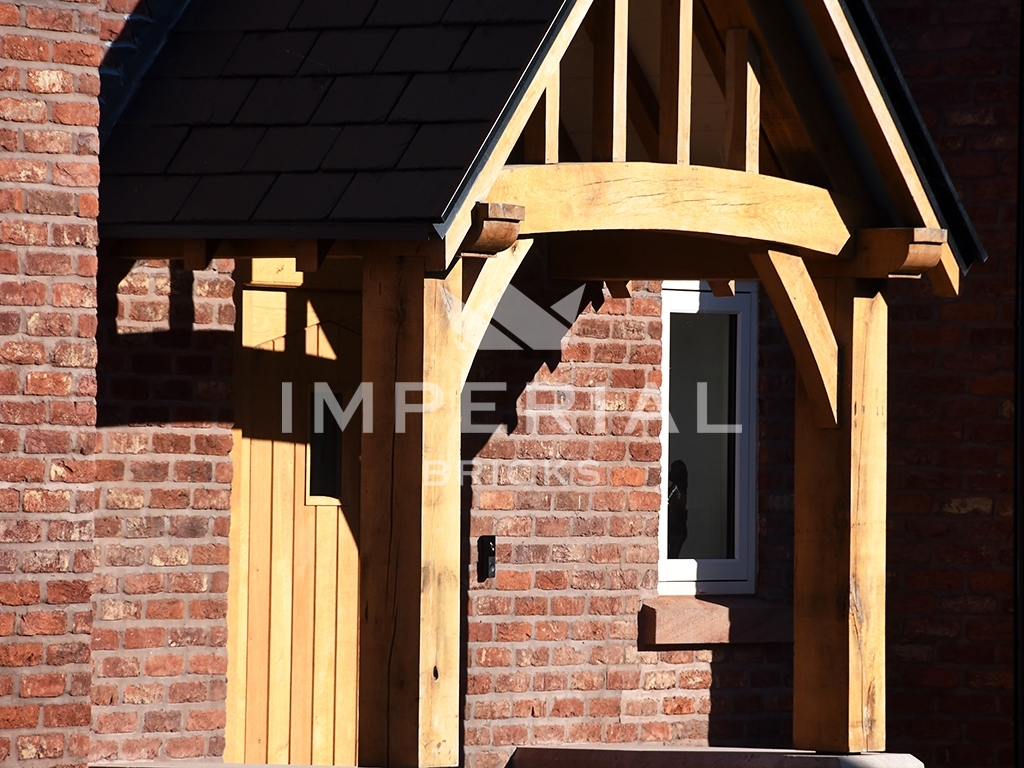
Example of a new build home, built using old-style bricks as an alternative to genuine reclaims.
They can be aged using several techniques, including:
These new bricks can sometimes look so authentic, it’s difficult to tell them apart from genuine reclaimed bricks.
| Feature | Genuine Reclaimed Bricks | New Reclamation Bricks |
|---|---|---|
| Aesthetic Appeal | Authentic history and character | Aged, heritage look |
| Supply Reliability | Low | High |
| Wastage Rates | High (typically ≥20%) |
Low (typically <10%) |
| Frost Resistance | Unknown | F2 Rated (for most external facing bricks) |
| Size Consistency | Often inconsistent | Consistent |
| Testing Standard | None (sold as seen) | Tested to BS EN 771-1 |
| Cost | Often higher (Due to scarcity and more wastage) |
Often lower (Consistent supply and lower wastage) |
| Best For | Repairs Small extensions Listed buildings |
New builds Extensions Renovations |
As with everything, there are good and not-so-good points about every decision. Call it a pros and cons list if you will.
We’ll run through the main points you should consider when choosing to use genuine reclaimed bricks.
This one is obvious, but you cannot beat genuine reclaimed bricks that carry a historic story and have been genuinely plucked from a previous century.
Take a handmade brick for example. You’ll see the years of soot engrained into the delicate creases and texture on the brick face, and some residual mortar from their previous life.
There’ll likely be a few painted faces, giving you a tell-tale clue about the brick’s former use. Along with rough edges sustained as the former building was sensitively demolished to preserve the bricks for a new life elsewhere. Reclaims have a former life story – likely older than your own – that you can bring into the walls of the next chapter of your story.
Just imagine, you finally build that dreamy countryside house with gorgeous reclaimed bricks, and when people ask where the inspiration for your design came from, you get to weave in the story of the very bricks that help to hold your home together. How nostalgic.
From a re-use perspective, it’s hard to beat the sustainability associated with using materials that already exist. Instead of being crushed for hardcore or sent to landfill, bricks are given a second life in a new construction project.
As reclaimed bricks have already withstood decades (sometimes centuries!) of weathering in the British climate, they carry a certain reassurance that they’ve already stood the test of time. However, it’s important to bear in mind that past performance doesn’t guarantee future performance, as reclaimed bricks aren’t tested to modern standards.
Quantity
There’s no denying genuine reclaimed bricks are beautiful, but getting hold of them? Well, that can be a little tricky.
For remedial work, infills and small extensions, with some hunting you’ll usually find a couple of options in the quantity you need.
However, if you’re thinking of building a new home using reclaimed bricks, you’re looking at a minimum of 8-10,000 bricks for a small size dwelling. Finding this amount in a suitable colour and size? This task can be even harder.
The issue is there are more new building projects around the UK requiring bricks than there are old building demolitions, which creates a supply and demand problem. There simply aren’t enough reclaimed bricks to go around, which is why a lot of people turn to new reclamation bricks that look old, rather than the real thing.
Size
For the majority of demolitions in the UK, the buildings are old. So when it comes to the bricks that come off the site for resale, they’re usually an imperial size. It’s unusual to see modern metric size bricks come from a demolition site.
Likewise, when you’re searching for genuine reclaims for your project you’ll probably be looking for a particular imperial size.
There is already a limited supply of reclaimed bricks, so adding in the need for a particular size creates another layer of complexity to your brick search.
If you’re set on a small new build, you’re not going to be too restricted on size. But if you need bricks for an extension or repair work, they obviously need to match the existing brickwork as closely as possible.
Merchants selling reclaimed bricks will list their working size, but something to be aware of is that each brick can deviate from the advertised size, especially if they’re old handmade. This can add to the wastage percentage you need to factor in.
Quality
Another challenge you need to consider when sourcing reclaimed bricks for your project is their quality.
Firstly, reclaimed bricks are not tested to modern standards after retrieval from a demolition site. You need to be aware that there are no quality guarantees and although unlikely, some bricks may succumb to freeze-thaw issues later on, which can eventually lead to brick spalling.
Secondly, as much as there are very genuine contractors who will actively sort through bricks on a demolition site and discard those that aren’t reusable for brickwork, there are some that simply don’t do this.
Without demonising all building contractors, there are some out there that will sort, clean and pack reclaimed bricks to sell, but they’ll cleverly hide the ones that don’t quite make the quality cut.
Think of a pack of bricks: you see all 4 sides upon inspection of a wrapped pallet. What you don’t see? The bricks packed inside the pallet.
Each brick comes with a selling price, so the more that don’t make the quality cut, the less the contractor will make from the bricks on that particular demolition job.
So, you see the temptation to ‘hide’ the less-than-great bricks in the middle of the pack, and you won’t know about it until your builder opens up the pallets on site.
The best way to avoid this scenario is to ask to see bricks in the middle of the pack by taking a few bricks off of the top layer or two. Your builder will soon be able to spot any issues before you commit to buying.
Wastage
As we’ve just discussed quality, what we don’t want you to confuse this with is wastage.
It is completely normal to have a certain percentage of wastage for any bricks, whether they’re new or reclaimed.
Reclaimed bricks are typically assessed on the quality of their appearance, but a contractor or merchant selling them often cannot guarantee their durability.
Due to this, you should expect a wastage amount of at least 10%, leaning more towards 15-20% depending on the batch.
This added percentage will allow for any breakages in transport, irregular sizes and cuts/breakages on-site.
Now thinking back on the quantity of bricks you need, if you’re sourcing a large amount this additional wastage percentage can push up your costs and reduce your choice compared to new bricks (where typical wastage is around 5-10%).
There’s also another potential problem to consider – running out of bricks during your build.
Say you found a big batch of reclaims in the perfect size and colour, ordered what you need and accounted for wastage. But, something unexpected happens on site… Maybe increased breakages, maybe a slight change in the design – and you run out.
So you go back to the merchant you ordered from to get some more, only to find you had their entire stock or they’ve since sold the remainder of the batch to someone else. Suddenly you have no bricks that match to complete the build. What a nightmare.
The only way you’d remedy this is to find another similar batch of bricks (hopefully), or to consult a supplier for a brick match and hope they can age their new bricks to match.
Either way, it’s not an ideal situation, but one to keep in mind.
If you love the look of reclaimed bricks but are finding sourcing them difficult, you may consider the option of using new reclamation (old-style) bricks instead.
Below are the main considerations of using them so you’re fully informed before you make your brick choice.
Quantity
One of the main benefits of sourcing new bricks that look old is their supply and availability.
New bricks are purpose-made by manufacturers to their own specification, meaning you don’t usually need to worry about whether there are enough bricks to complete your project when ordering.
Yes, you may encounter lead times, especially if you’re wanting a brick that’s in high demand, but you’re usually not restricted on the amount you can order.
New reclamation bricks are manufactured in large batches, and unless you change something significant on-site, you shouldn’t be left short.
And even if by any chance you are, it’s very likely your brick supplier will have, or can get hold of, bricks from the same batch so any top-up orders will still match perfectly.
Size
Another advantage of new reclamation bricks is the choice of sizes; you have plenty of options available.
If you’re building a new property, it’s easy to find old-style bricks in the modern metric size. Using this size means it’s easier and faster for your builders to lay the bricks too.
Don’t think you’re restricted to metric size though. A lot of manufacturers and suppliers offer new imperial size bricks too, so if you need to match bricks for an extension or are doing some repair work, it shouldn’t be too difficult to find what you need.
The biggest benefit of using new reclamation bricks is their reliability and testing assurances.
To be available for sale in the UK, new clay bricks must be tested to meet the standards defined in BS EN 771-1. Here’s a quick breakdown of what they’re tested for:
If you’re leaning towards buying new bricks that have been aged to look old, you have the assurances that they’re tested to modern standards and are fit for use in the British climate. Which, let’s face it, is pretty unpredictable at times.
Finding bricks that match up to your old ones, usually for an extension or remedial work, can be a challenge. However, if you’re considering new reclamation bricks rather than genuine reclaims, you have the added benefit of brick matching.
As part of the brick matching process, new bricks can be weathered and aged to match your old ones.
To do this, you can approach brick suppliers who offer the service, send them photos and size details of your original bricks and they’ll work with you to find a match.
Usually this means custom blending colours, soot washing, weathering, and even tumbling new bricks to make them look old – just like the bricks you need to match.
This takes what can be a stressful sourcing task and offers you a clear end result.
This brick matching and weathering process can also be an option when you have a listed or historic building (sometimes also in a conservation area) where planning authorities stipulate that the bricks must be an indistinguishable match to the originals.
We’ve previously helped customers get new reclamation bricks approved where they otherwise couldn’t find an acceptable reclaimed brick match. An example of this is the addition of the visitor centre to Canterbury Cathedral – strict planning restrictions for the build required a seamless brick match.
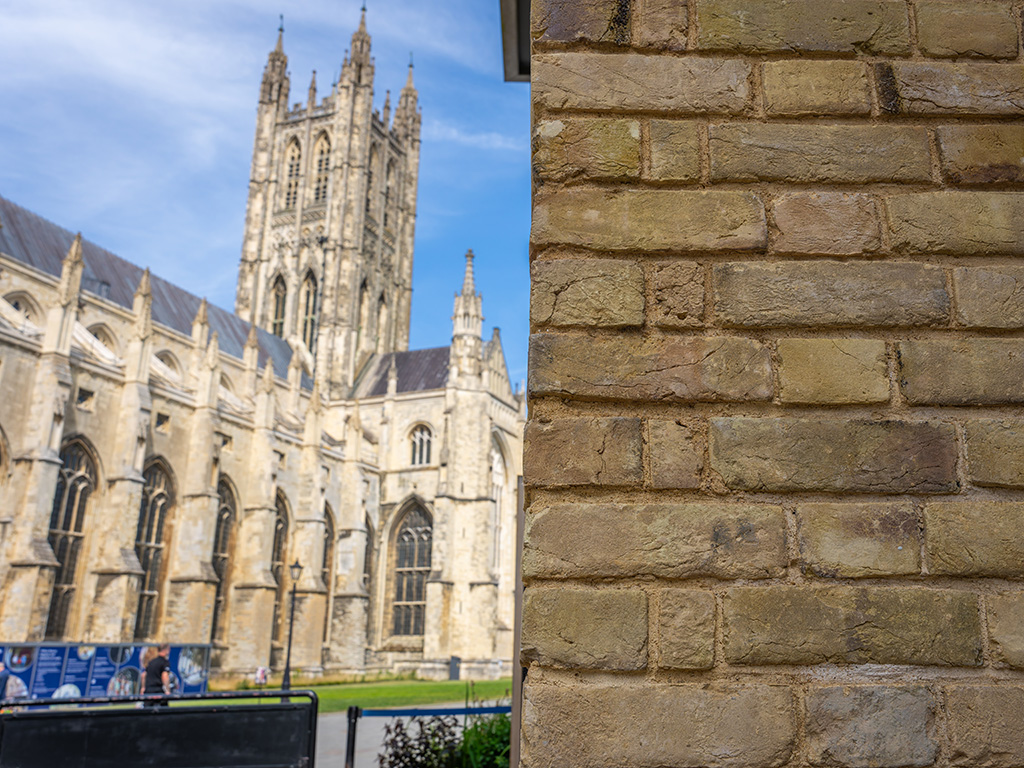
Image shows a corner of the new brickwork on the Canterbury Cathedral Visitor Centre, with the cathedral in the background.
Deciding on the brick matching route means you’re getting the best of both worlds – bricks that look like genuine reclaims, but with all the testing and supply benefits of new bricks.
As great as new reclamation bricks that look old may seem, it isn’t all sunshine and rainbows.
There are times when bricks that aren’t genuinely reclaimed just won’t cut it.
Say you have a listed building you need to repair or you have been granted permission for extension/remodelling, it’s not unheard of that planning authorities will require you to use genuine reclaimed bricks to complete the building work.
Where this issue is concerned, you will need to use reclaimed bricks.
If you have your heart set on using reclaimed bricks and are excited about the historic tale and life story that can come with them, then new reclamation bricks aren’t for you.
As much as they may look just like them, they quite simply aren’t reclaims.
If you feel you’d be disappointed in years to come that you didn’t go for the genuine reclaims, then do not use new old-style bricks in place of them.
Remember, once your brickwork is built, you cannot change the bricks afterwards without drastic (and expensive) measures.
A common question many ask is whether reclaimed bricks cost more or less than new reclamation bricks.
The short answer is genuine reclaimed bricks tend to cost more than new bricks.
The longer answer? It depends.
Let’s dig into this a little.
Generally, as we’ve discussed in this article, reclaimed bricks tend to be in shorter supply than new and you need to allow for higher wastage percentages. Both of these points push the price of reclaims up.
Buying 1000 new bricks vs 1000 reclaimed bricks requires different wastage allowances, so even if they’re the same price, you’re going to need to buy more reclaimed bricks to do the same job.
However, there are some circumstances where buying reclaims can be similar in price, or cheaper. This is usually going to be in cases where you need some remedial or repair work done, or maybe you find a job lot being sold off and you only have a small project like a boundary wall. You may also find local reclaim yards with small quantities will sell the exact amount of bricks you need, whereas with buying new bricks you may be required to purchase by the pack rather than a particular quantity.
In these cases, buying smaller quantities of reclaimed bricks vs new bricks can make the cost difference negligible.
There are strong arguments on both sides for using reclaimed bricks or new reclamation (old-style) bricks for your project.
Reclaimed Bricks
If you want the historic character that comes with reclaimed bricks, then of course that’s the route you should take. Just make sure you’re aware of potential challenges such as:
New Reclamation (Old-Style) Bricks
However, if true authenticity isn’t a deal-breaker, you’re likely to find more choices and options to suit your budget by exploring new reclamation bricks. They offer more flexibility in:
There’s also the major benefit of quality assurances from modern testing. Just be mindful of planning requirements, especially in conservation areas and for listed buildings, where you might still need to use reclaimed bricks.
Choose genuine reclaimed bricks if:
Choose new reclamation bricks if:
We want you to make the best choice to suit your project and preferences, and we hope this guide helps you in making that choice.
If you are considering exploring what new reclamation bricks can do for your building project, we’d like to invite you to take a look at our tumbled brick range. All of the bricks are designed so you’d never guess they’re actually new. If you do like the look of them, you can request samples online to get a closer look and compare them to any other bricks you’re considering.