Looking for Brick Slips for facade systems?
Visit our dedicated website.
Looking for Brick Slips for facade systems?
Visit our dedicated website.
Concrete vs clay bricks – which option is better?
We’d love to give you a clear-cut answer, but unfortunately, it’s not that simple.
If you’re planning a conventional brick-and-block house build or extension, you typically have a choice between using classic clay bricks or modern concrete bricks.
Though clay bricks are the traditional choice, concrete facing bricks have grown in popularity over the past several decades.
Now that’s not to be confused with concrete blocks; concrete bricks and concrete blocks are two different building products, intended for different purposes (more on this shortly).
To help you figure out which option is right for your project, we’ll compare using clay brick vs concrete brick for aesthetics, durability and longevity, environmental impact, and cost, so you can decide which one best suits your plans.
Before we get started, we want to clarify that just because we’re a clay brick supplier, this information isn’t biased towards clay bricks. Several online sources skew information in their own interest, but we want you to choose the product that works best for your project, regardless of what we sell.
Want to skip ahead? Jump to the relevant section:
Difference Between Concrete Bricks and Blocks >
Concrete vs Clay Bricks Comparison – Quick Reference >
Visual Appeal and Colour Retention >
Durability and Longevity >
Lifespan >
Production and Testing >
Maintenance >
Environmental Impact >
Fire Resistance >
Thermal Performance >
Costs >
What’s Best for Your Project >
Search for ‘concrete bricks’ or ‘concrete blocks’ online and you’ll most likely be presented with a mix of blocks, commons, and sometimes even cinders of various sizes.
The names are often used interchangeably, but they are, in fact, two different products.
To be clear on what we mean when talking about concrete bricks, we’ll explain how they differ from blocks.
Concrete Bricks
Concrete bricks (also known as concrete facing bricks) are an alternative to conventional clay house bricks. They’re used on the front face of a building and are available in various colours and textures to replicate the look of clay.
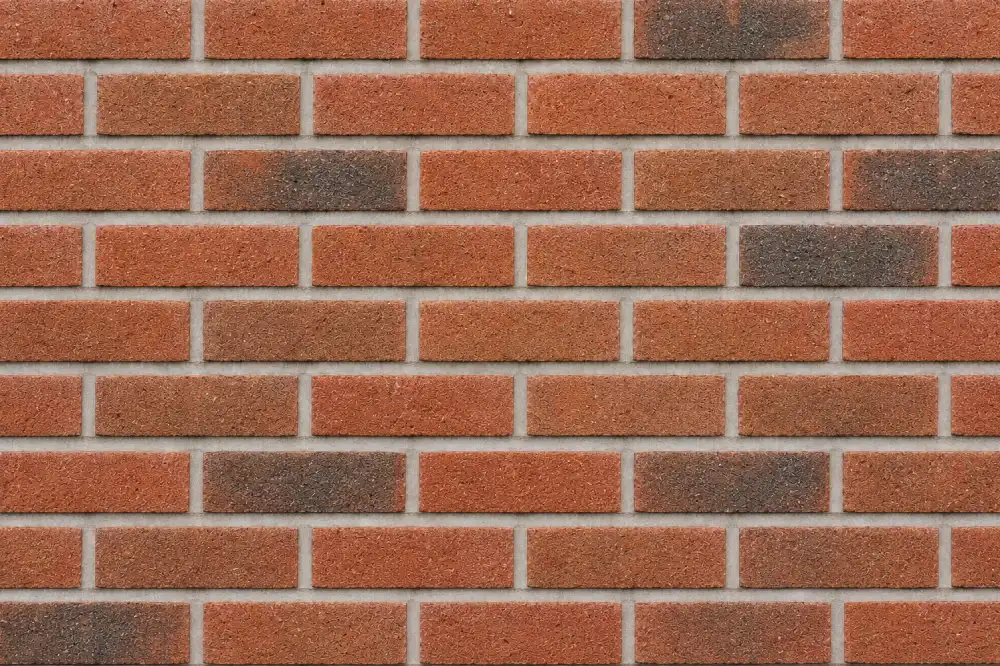
Above: Illustrative example of a wall of concrete facing bricks.
Concrete Blocks
Concrete blocks are larger than concrete bricks and are mostly used for structural building work. They’re either solid, hollow, or perforated to suit various design requirements.
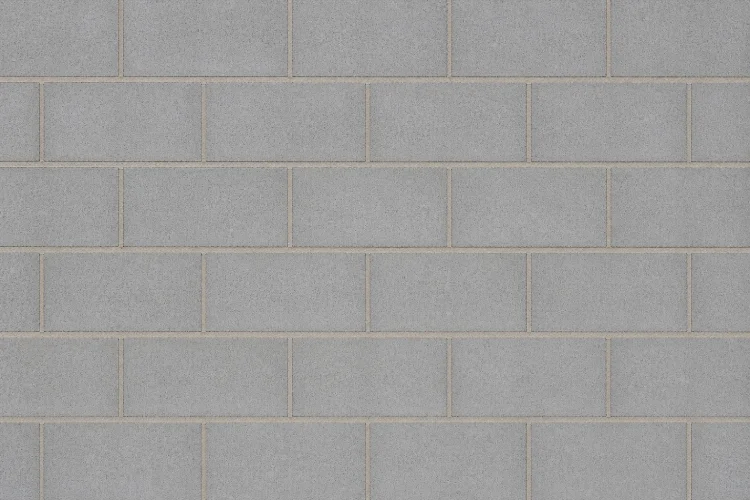
Above: Illustrative example of a wall of concrete blocks.
Solid blocks make up the inner frame of most properties, whereas perforated and hollow blocks tend to be used in larger commercial units or specialist residential builds.
For typical UK housing with a modern cavity wall, all you need to remember is that blocks are used for the inner wall (the bit you don’t see), and bricks are used for the outer wall (the bit you do see).
Now you understand the difference, let’s get back to comparing what you’re most interested in… the bricks.
If you’re short on time, here’s a quick overview of how concrete and clay bricks compare.
Click any feature to jump straight to that section for more detail.
| Feature | Clay Bricks | Concrete Bricks |
| Aesthetics | Wide range of natural colours, textures and finishes | Wide range, but can fade over time with UV and frost exposure |
| Lifespan | 150+ years | 60-100+ years |
| Maintenance | Minimal to none (may experience mild efflorescence) |
Minimal to moderate (may experience stubborn efflorescence and long-term colour fading) |
| Environmental Impact | Higher upfront carbon cost, offset by a long lifespan and minimal to no maintenance | Lower upfront carbon cost, but shorter lifespan and increased likelihood of maintenance |
| Fire Resistance | A1 non-combustible | A1 non-combustible |
| Thermal Performance | Marginally better at limiting heat transfer | Marginally better at absorbing and retaining heat |
| Costs | Wide pricing scale dependent on brick type and finish | Lower initial price point |
Aesthetics are always going to be a main deciding factor in whether you choose concrete or clay bricks for your project.
Though they can appear similar at first glance, there are some differences between the two.
Clay Bricks
Colour is determined by the raw clay and added minerals, meaning bricks are mostly available in traditional red, orange, brown, yellow and buff shades. Many of these have an iconic association with particular areas of the country (which you can explore in our regional UK brick colours guide).
Depending on the type of brick, textures can be creased or smooth, with sanded or waterstruck faces.
Clay can also naturally weather over time and produce an aged patina. If you’re extending or renovating an existing property, this weathered appearance can be replicated on new bricks by some manufacturers to ensure a seamless match.
Concrete Bricks
Colour is driven by pigments added to the cement in the concrete mix. While this means concrete bricks aren’t restricted by natural material colours, the ranges on the market are limited as fewer manufacturers produce them.
The options you will find are mostly designed to replicate clay bricks. They feature earthy tones and consistent moulded textures, though smooth finishes are also available. In fact, with some high-quality options, you’d be hard-pressed to tell them apart from the real thing!
Here’s the big difference though – as time progresses and concrete bricks are subject to the UK climate, their colour can slowly fade.
If you’re wondering why: when colour pigments are added to a concrete mix, they only bind with the cement, not the aggregates, which remain their original colour (usually a shade of grey). Depending on the manufacturer, the brick face can also be coated in a more pigment-rich cement layer to enhance colour. Over extended exposure to UV, frost, and weathering, surface wear can make the aggregate underneath more noticeable, causing the bricks to appear faded.
Comparing the Two
If you desire traditional colours that do not fade and like the appeal of naturally-aged finishes, go for clay.
If you prefer a more uniform finish and an aged look isn’t your vibe, go for concrete. Just be aware that depending on the manufacturer, their production process, and the exposure level of your brickwork, fading might occur over time.
Both concrete and clay bricks are designed to be highly durable and last many decades, providing brickwork is structurally sound, built to a high standard, and uses appropriate mortar.
Build quality aside, there are some key differences between the two that may sway your decision.
You want your bricks to last as long as possible, especially as they aren’t something you can easily change later on.
Concrete vs clay bricks lifespan estimate:
Clay Bricks
Clay bricks have been manufactured and used in construction for many centuries, and have been proven to last. You can see this firsthand in notable historic brick buildings such as Hampton Court Palace in London and Tattershall Castle in Lincolnshire.
Concrete Bricks
Concrete facing bricks, however, are a much newer product which has grown in popularity over the past 50-60 years, so can’t be quantified for lifespan in the same way. As an estimate, they are presumed to last around 60-100+ years; they could last longer, but it isn’t guaranteed.
Comparing the Two
For lifespan alone, the default choice is often clay bricks. They’re already proven to stand the test of time and unless your build is intentionally demolished in the future, it will probably outlive you!
Concrete bricks may last just as long, but due to their relative newness in the market, there isn’t the historical proof to support it yet.
If you’re wondering how concrete bricks are expected to last 60-100+ years if they haven’t been around long enough to prove the upper end of that estimate, you have a fair point.
Most of it comes down to product testing. Both concrete and clay bricks are subject to rigorous testing before they’re made available for sale. Tests include freeze-thaw cycles and water absorption, which mimic the natural environment in which they’ll be used. The results of these tests provide indications of the product lifespan.
How each brick is manufactured can also be used as an indicator:
Clay Bricks: Made by mixing natural materials including clay, sand and minerals with water, then moulding by hand, extruding, or pressing to shape, before firing at high temperatures
Concrete Bricks: Made by mixing cement, sand and aggregates with water to begin the hardening process (hydration), then pressing to shape in a mould before steam curing
Comparing the Two
Comparing them, the high-temperature firing of clay generally produces stronger, denser bricks than the chemical process of setting concrete, which contributes to clay’s longer projected lifespan.
Clay bricks and concrete bricks are both designed to withstand prolonged exposure to the UK climate and last a very long time, but on a maintenance level, they differ.
Clay Bricks
Providing building work is sound, clay needs next to no intervention and can be left for decades to weather and age naturally. Sometimes, brick efflorescence can occur, but as long as no water ingress problems are present, it’s harmless and easily treatable.
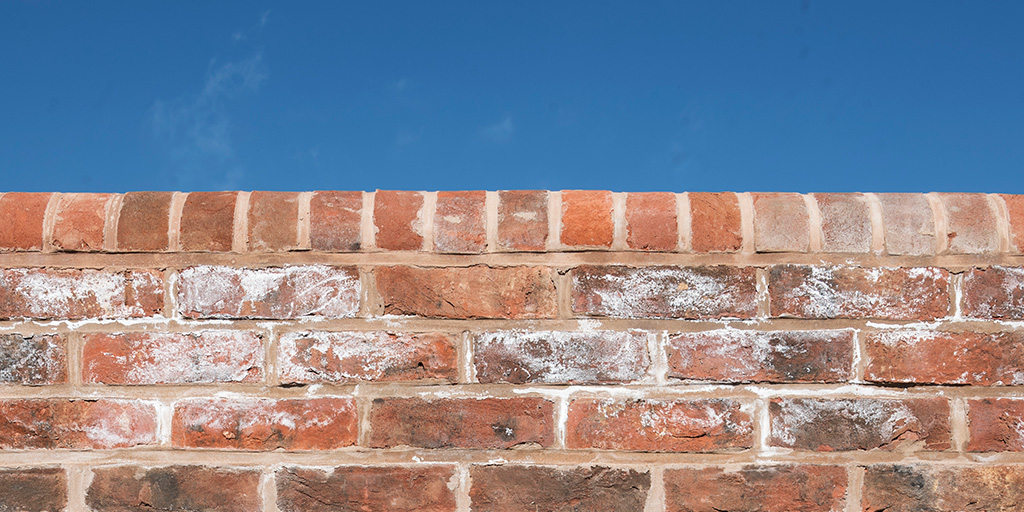
Above: Example of clay brick efflorescence.
Concrete Bricks
Concrete may go years without needing any maintenance. However, the risk of efflorescence in concrete bricks is higher than clay, and considerably harder to remove.
Unlike clay brick efflorescence, which derives from natural salts migrating to the brick face, concrete efflorescence is caused by calcium hydroxide from the cement reacting with carbon dioxide at the surface. This chemical reaction can create an almost permanent bond to the brick face.
Treatments such as acidic cleaners can be used to rectify it, but without specialist application, there’s a risk of permanently damaging the surface.
It’s not all doom and gloom though; many concrete bricks are now steam cured which reduces the efflorescence risk. You also have the option to apply a breathable masonry sealant as a preventative, which may also help prevent or delay colour fading.
Comparing the Two
If lack of maintenance is a significant factor in your brick choice, choose clay bricks. They’re the least likely to require any upkeep and should efflorescence occur, it’s much easier to treat on clay than concrete.
If you do have your heart set on concrete (pun not intended), consider scheduling routine brickwork checks to catch any signs of efflorescence early on, or applying a breathable sealant.
Environmental impact is heavy on everyone’s minds when planning a building project, so keeping it as low as possible is usually the priority.
When it comes to concrete vs clay bricks, they both produce carbon emissions during manufacture, but in different quantities.
Clay bricks are fired in kilns which reach temperatures in excess of 800°C for prolonged time periods, while concrete bricks are steam cured in temperatures under 200°C for a shorter time, so their upfront carbon cost is lower.
Before you jump to thinking concrete is the way to go, we need to think back to our earlier comparisons on lifespan and maintenance.
Put simply, environmental impact is a trade-off between carbon emissions, maintenance, and longevity:
Comparing the Two
There’s no escaping that the production of bricks impacts the environment. You’ll either need to accept the higher upfront carbon cost of clay bricks, knowing they have a longer projected lifespan and virtually no maintenance, or choose concrete bricks with a lower upfront carbon cost, acknowledging they may not last as long and might need surface maintenance treatments.
If you want to learn more about the carbon impact of bricks, our brick sustainability guide explores this further.
When it comes to fire resistance, both concrete and clay are non-combustible materials, so are safe for most building applications.
A1 is the highest classification and they’re both equal on this one, so fire resistance won’t be a limiting factor in your brick choice.
Comparing the Two
There’s no choice to make, they’re both exactly the same!
There are some differences in thermal performance when comparing concrete and clay facing bricks.
There is, however, an important factor you need to remember – neither concrete nor clay bricks primarily provide insulation. For new builds, this is the job of a modern cavity wall.
Comparing the Two
Overall, while clay bricks perform slightly better here, it isn’t enough of a difference to significantly impact a building’s thermal performance. So in this regard, we don’t recommend basing your choice on thermal performance alone.
Cost will nearly always play a role in choosing bricks for your project.
As much as we all wish it wasn’t a factor, you’re going to have a budget set aside for building materials, so it’s worth having an idea of market prices.
| Brick Type | Approximate Price Per 1000 (exc. VAT) |
| Concrete Facing Bricks | From approximately £820 |
| Extruded Facing Bricks | From £480 – £1985 |
| Pressed Clay Facing Bricks | From £600 – £2100 |
| Handmade Clay Facing Bricks | From £950 – £2520+ |
Prices vary by manufacturer, quality and finish. Clay brick prices are based on industry averages from our Cost of Bricks in the UK guide, and concrete price is based on current market average at the time of writing (August 2026).
You’ll notice you can get cheaper extruded and pressed clay bricks at the basic entry-level point, but as a general guide, quality concrete facing bricks tend to cost less than comparable clay brick options.
As you can see, clay bricks cover a much wider pricing scale than concrete, and prices increase significantly as you move from standard extruded bricks to genuine handmades, imperial sizes, and bespoke finishes.
The higher clay prices can be attributed to the manufacturing process. Raw materials for clay bricks are more expensive, their production time is longer, and they require higher temperature kiln firing than concrete alternatives.
Beyond the initial purchase price, costs involved in brick transport, mortar and labour time on-site are the same for both materials.
Concrete bricks may seem the winner on initial price point, but you also need to think past the construction phase. The up-front cost might be lower, but consider the intended use and longevity of the building. When both are built to a high standard, clay is more likely to outlast concrete with very little risk of aesthetic degradation.
Alongside having a lower expected lifespan, concrete bricks can also carry some long-term risks:
These issues might not happen, but if they do, you could be hit with maintenance costs later on which could wipe out any up-front savings made on the initial brick price.
Ultimately, we recommend just working within your budget, choosing what you like the look of, and ordering samples for comparison.
Do you prefer the look of traditional clay bricks? There are plenty of options that can fit within your budget. Prefer a modern-style concrete brick option? Go for it. Just keep in mind you might incur some maintenance costs later down the line.
Comparing concrete vs clay bricks, there’s no clear winner between them.
What’s best for your project primarily depends on your project type, how long you want the bricks to last, your willingness to take on maintenance, and most importantly – what you prefer the look of.
Concrete bricks are a newer offering in the brick market compared to clay and suit a range of modern project types.
Choose them if:
They’re available in a range of colours and can have shorter lead times than some clay options; just remember to factor in potential long-term maintenance costs should they show signs of colour fading a few years down the line.
Clay bricks are incredibly durable, retain their colour well over time, and naturally weather without requiring maintenance.
Choose them if:
Their initial cost can be more than concrete, but the wide variety of types and finishes available, along with their projected 150+ year lifespan, usually make clay bricks the go-to choice for both homeowners and developers wanting a traditional, characterful build.
Whether you choose concrete or clay, it’s important to order samples ahead of time to compare. We’d also recommend building a small sample panel on-site to ensure you’re 100% happy with your choice before committing to the full order.
We don’t supply concrete bricks, but if you’ve decided on clay bricks and want a characterful aesthetic for your build, we offer a wide range of traditional bricks in regional colours and various finishes.
Should you need it, we also offer a free brick matching service. Just send us some brick photos and measurements, and we’ll get to work finding the best match for you.