Looking for Brick Slips for facade systems?
Visit our dedicated website.
Looking for Brick Slips for facade systems?
Visit our dedicated website.

Brick finishes can seem a little mind-boggling.
A quick search online reveals companies and forums talking about brick textures, types, colours, treatments, paints, sealers…
So when we’re talking about brick finishes, what do we actually mean?
We use this term ourselves a lot. Yes, it can be interpreted in different ways, but a simple way to think about it is anything (aside from colour) that affects the final look of a brick.
This final look is primarily dependent on the manufacturing and processing methods, so hang tight and we’ll explain all.
Brick finishes can be divided into two categories – brick texture as a result of the brick type and manufacturing process, and post-firing treatments.
A lot of people use these interchangeably, but essentially:
Brick textures tend to be smooth or sand-faced, and may have flat, creased or drag-faced surfaces. These characteristics are determined before bricks go in the kiln, from how the clay is compacted and whether the bricks are moulded or wirecut.
Brick treatments are processes the bricks can be put through after firing – once they’ve cooled down!
This guide focuses on the finishes produced by brick treatments. Though, if you’re interested in how texture is produced, our guide to different types of facing bricks covers this in more detail.
There are three main types of brick finishes used for traditional style bricks:
They can be applied individually, or combined to produce custom brick finishes, which are often used for brick matching.
Other surface treatments such as tinting, painting and sealing exist, but we’re focusing on those typically applied during production, before the bricks reach you.
A weathered finish is achieved by applying a weathering solution to the face of bricks. Different strengths of solutions are used to produce varied levels of weathering – from light to dark.
These shade variances are often blended across a pack of bricks to produce a naturally-sustained weathered appearance.
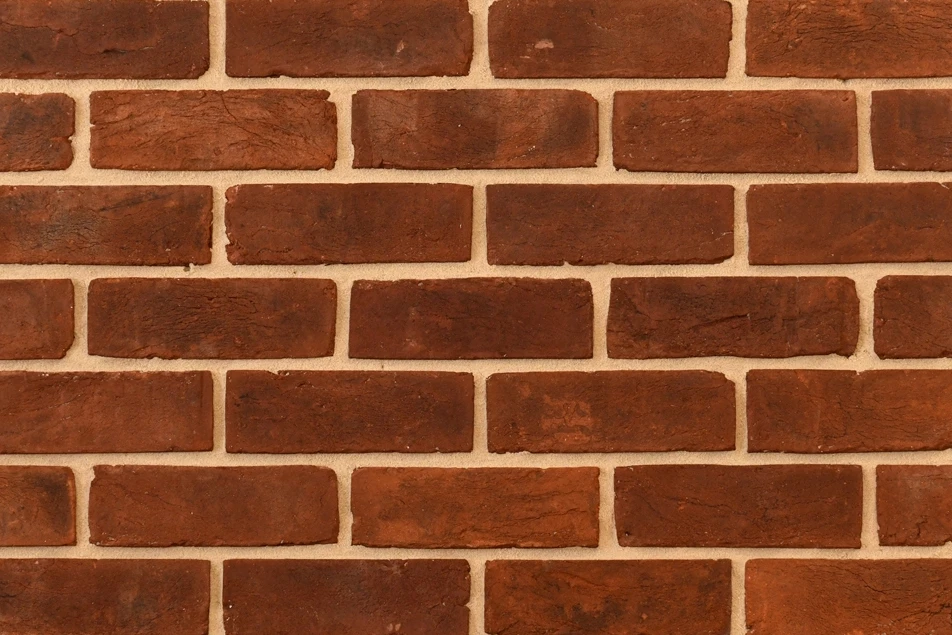
Above: Red handmade bricks with a weathered finish – Weathered Red Handmade
Bricks are porous and can, over decades, absorb airborne elements such as soot and carbon from the atmosphere. These particles cling to exposed brick faces, darkening the colour and creating a ‘weathered’ look. Adding a weathered finish to new bricks mimics the look of this long-exposed brickwork.
Weathered bricks are commonly required to match up to older brickwork for extensions and renovations. Suppliers can offer both off-the-shelf and custom match options; our guide to weathered bricks explains these in more detail.
The clue is in the name with this one. Tumbled finishes are produced by ‘tumbling’ the bricks around until they have softened, rounded edges and an old, rustic look.
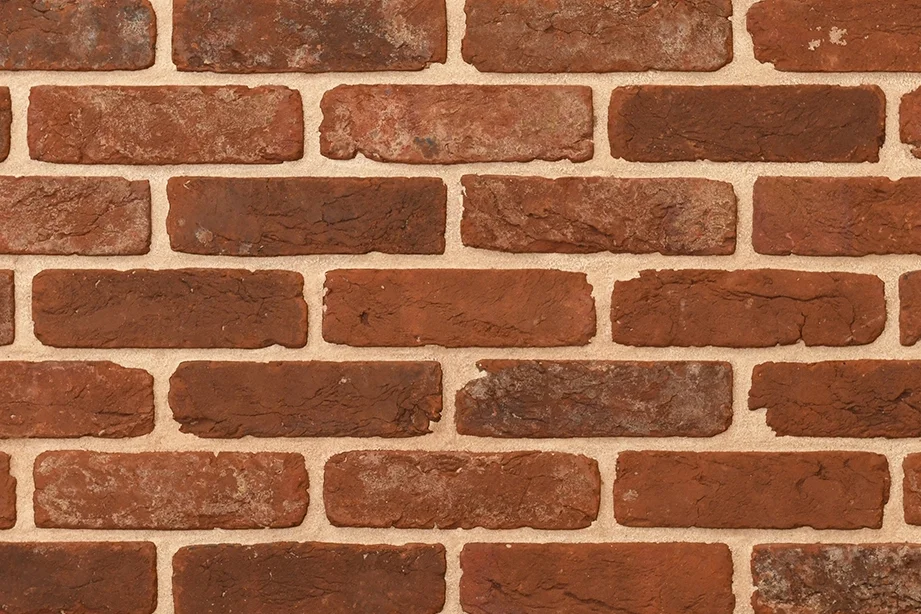
Above – Red handmade bricks with a tumbled finish – Reclamation Cheshire
Brick tumbling solves the reclaimed brick scarcity issue. Many people either love the characterful, rustic look of reclaims and want them for self-builds, or need them to match older properties for extensions and renovations.
This finish replicates what happens to bricks during a building demolition. Bricks fall, roll and tumble into each other before ending up in a big pile, after which they’re carefully checked, sorted, cleaned by hand, and packed for resale.
Combined with other finishes (more on this shortly), tumbled bricks tend to be indistinguishable from genuine reclaims.
So if you’re looking for reclaims, it’s worth weighing up the pros and cons of using old-style bricks instead.
Simply put, aged bricks are new bricks that have had various finishes applied to make them look old.
Any number of finishing processes, either in isolation or combined, are used to achieve a desirable aged look. These can include weathering and tumbling, as well as tinting and mortared finishes.
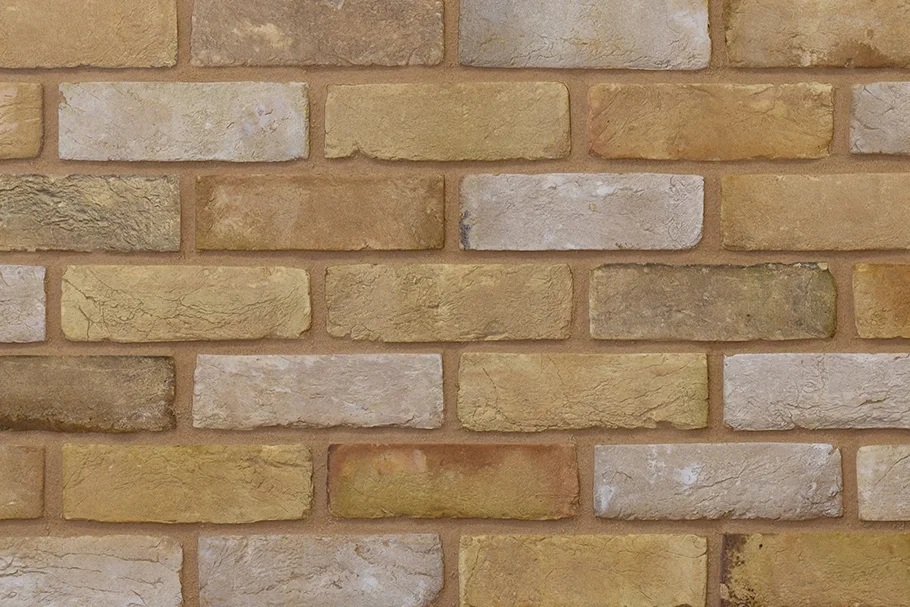
Above: Buff handmade bricks with weathered and pale washed finishes – Reclamation Buff Handmade
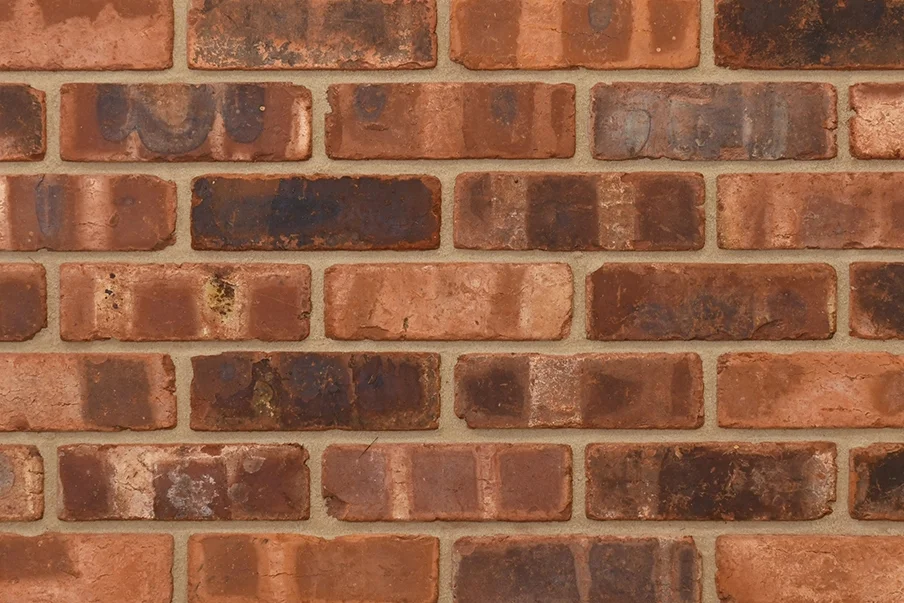
Above: Pressed bricks with weathered and tumbled finishes – Weathered Outside Blend – Dual Faced
Similarly to tumbled bricks, aged bricks replicate the look of old or reclaimed bricks, but offer more flexibility in the finished look.
No two old bricks age the same. Even if the same bricks were used, they’ll have different exposure levels and will age and weather at different rates. Aged bricks allow us to combine brick finishes and offer more options for projects needing sympathetic matches to original brickwork.
Many of our old-style bricks are aged by combining different finishes.
Reclaimed bricks are in high demand, but low supply. Combining aged finishes with tumbling in particular allows for the production of bricks that perfectly replicate genuine reclaims. These new old-style bricks come with added benefits of continual supply, lower wastage rates, and meeting modern testing requirements.
Now we’ve covered the different types of brick finishing available, it’s worth being aware of custom brick finishes.
As part of a brick matching service, various coloured bricks can be blended and different finishes applied to custom match existing brickwork, or a desired aesthetic.
It starts with a base brick in the same size and closest colour to your existing bricks. They’ll then have any combination of shade blending, weathering, tumbling or other ageing finishes applied.
Different manufacturers and suppliers have different finishing processes available. So if you’re looking for a specific type of finish, we recommend checking if they offer anything similar in their ranges beforehand.
Achieving the right brick finish is crucial. Get it wrong and you’re either going to be stuck with brickwork that doesn’t match the original, or you might even dislike the result!
There are remedies that can be applied to brickwork, such as brick tints, but they can be costly and time-consuming. It’s far easier to get the bricks right before they’re laid.
Without sounding too defeatist, it can be difficult to choose the right brick finish yourself without help. In practice, most people need some expert input, whether that be from an architect, builder, merchant or brick supplier.
Your brick finish mainly depends on whether you’re planning a new build or extending/renovating:
For new builds, most people find a finish they like with an off-the-shelf option. This will involve searching online of course, but venture into nearby merchants and see what’s on offer. Find options you like the look of or that work with your desired architectural style.
Make sure you order samples and compare finishes – they can react differently across brick types and textures. Two bricks can have the same finish, but look completely different!
This can go one of two ways. We’ve known off-the-shelf choices easily get approved by planning authorities, but we’ve equally provided custom brick matching when off-the-shelf options didn’t suffice.
The best way to approach this is to go down the brick matching service route to begin with. If an off-the-shelf match will work, the supplier will tell you.
For extensions or renovations, you’ll need a brick matching service.
Even if you know what the original bricks are and they still happen to be available to purchase (rare, but not impossible), you may still need to match signs of weathering and ageing, meaning new bricks will stand out too much.
No matter what type of project you’re undertaking, now that you have a good understanding of brick finishes, you should be confident to go out and either start ordering samples you like the look of, or enlisting some professional help.
If it’s a characterful aesthetic you’re looking for, we offer a wide range of traditional bricks, available in metric, imperial and linear sizes.
Should you need it, we also offer a free brick matching service to alleviate any matching-related stress. Simply fill in the form, enter your brick measurements, attach some photos and we’ll get to work.