Looking for Brick Slips for facade systems?
Visit our dedicated website.
Looking for Brick Slips for facade systems?
Visit our dedicated website.
Here for the short answer?
Facing bricks are handmade or machine-made clay bricks which are used to build exterior walls. They’re the bricks that ‘face’ you on the outside of a building and are available in various colours, textures and finishes to suit different architectural styles. They also provide essential weather resistance to protect the building’s internal structure.
Basically, they make a building look attractive and help protect everything on the inside.
Ok, you now know what facing bricks are. What’s next?
It’s one thing understanding their definition, but if they’ve been written into your project spec and you’ve been told you need a certain colour or type, how do you know what you’re choosing is, in fact, a good quality facing brick? And even if you do, how do you know it will be right for your project?
This guide answers those questions and covers everything you might need to know before you embark on a sample ordering spree.
First, we’ll look at where they can be used in a little more detail…
Looking for specific information? Jump ahead:
What are Facing Bricks Used For? >
Facing Brick Types, Sizes and Costs >
What to Check Before Buying Facing Bricks >
Ordering Samples and Selecting Bricks >
Facing Brick FAQs >
Facing bricks are primarily used to build external walls, such as the outer leaf of residential and commercial properties, freestanding garden or boundary walls, and decorative features like chimneys and arches.
It’s a simple concept, though there are a few points to be aware of depending on your project plans.
The majority of facing bricks produced for the UK construction market are used for the exterior walls of housing and commercial buildings.
There are generally two types of walls:
Cavity walls are the modern standard, so if you’re undertaking a new-build project it’s likely they’ll be used in your design. However, if you’re extending or renovating an old property with solid walls, keep in mind that you’re going to need more facing bricks per square metre, so make sure it’s factored into your budget.
Tip: You can work out how many bricks you’d need for both cavity and solid walls using our brick calculator.
The facing bricks used for exterior brickwork, whether a new build or a renovation, help shape the aesthetic of the finished project. Here are a few examples.
Cobo House
This modern renovation in Winchester is a prime example of how bricks can establish the architectural identity of a home.
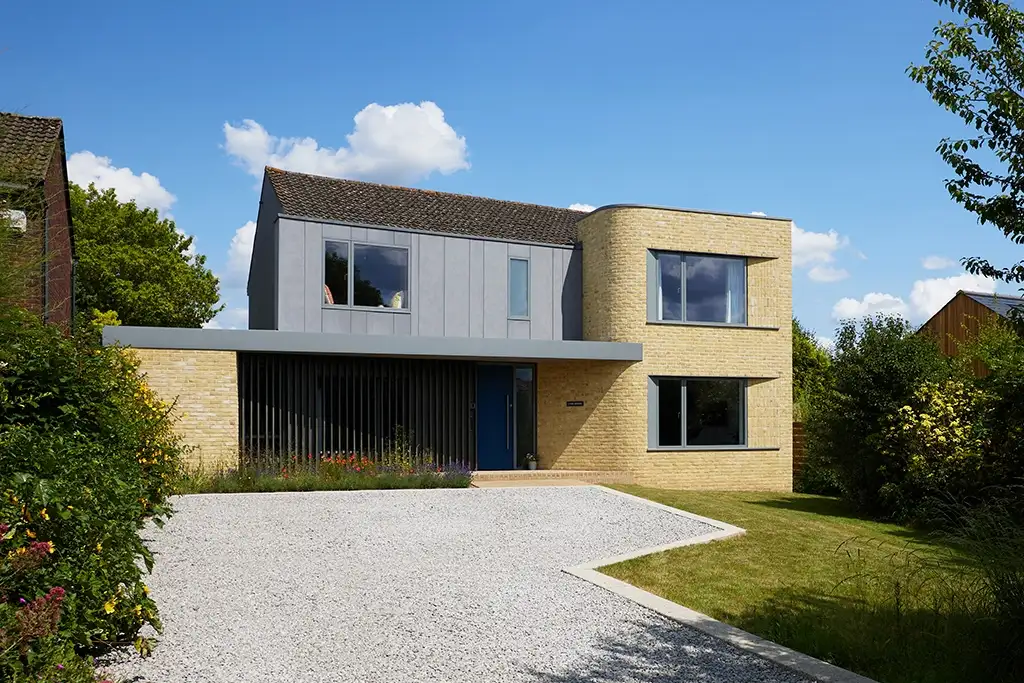
Its contemporary design pairs Cambridge Buff bricks with complementary grey cladding, creating a clean, cohesive colour palette across the front facade.
Old Hall
A Grade II Listed barn in Cheshire required facing bricks for extension work and infills to transform the formerly uninhabitable structure into luxury homes.
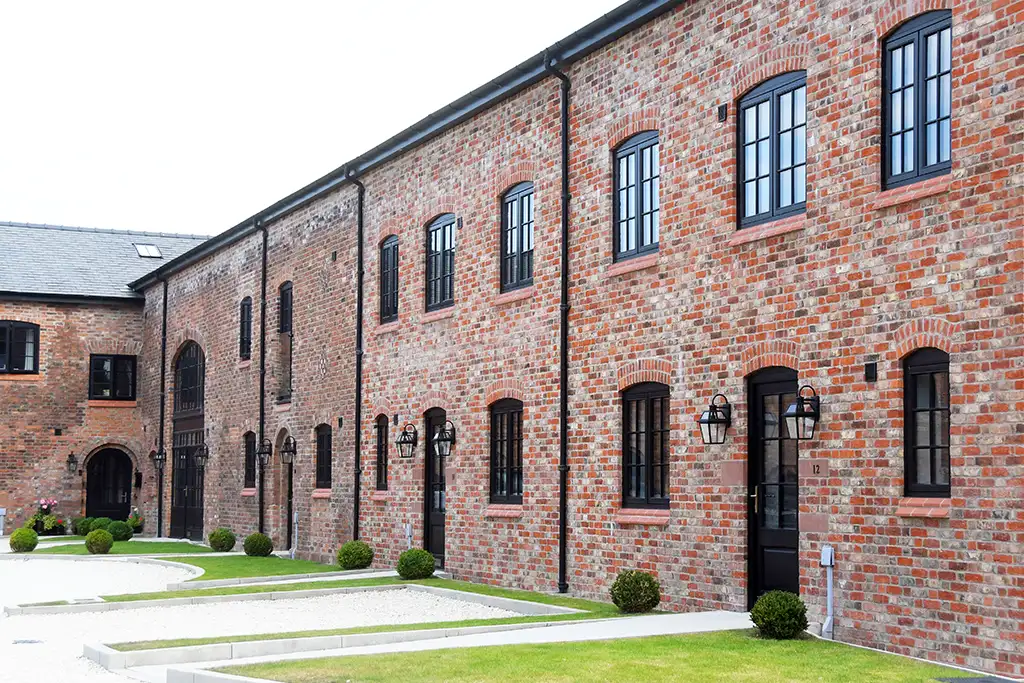
The mix of Country Blend and York Clamp bricks used is sympathetic to the existing, older brickwork and lends itself well to the adjacent new builds.
After buildings, garden and boundary walls are another common use for facing bricks. They’re often selected to match an adjoining property or blend in with the local landscape.
Freestanding or retaining walls are usually solid and can range from one to several bricks thick. Most are classed as extremely exposed brickwork, so choosing good quality facing bricks is essential (more on this later).
The RHS Bridgewater gardens restoration involved rebuilding extensive historic walling which had fallen into disrepair.
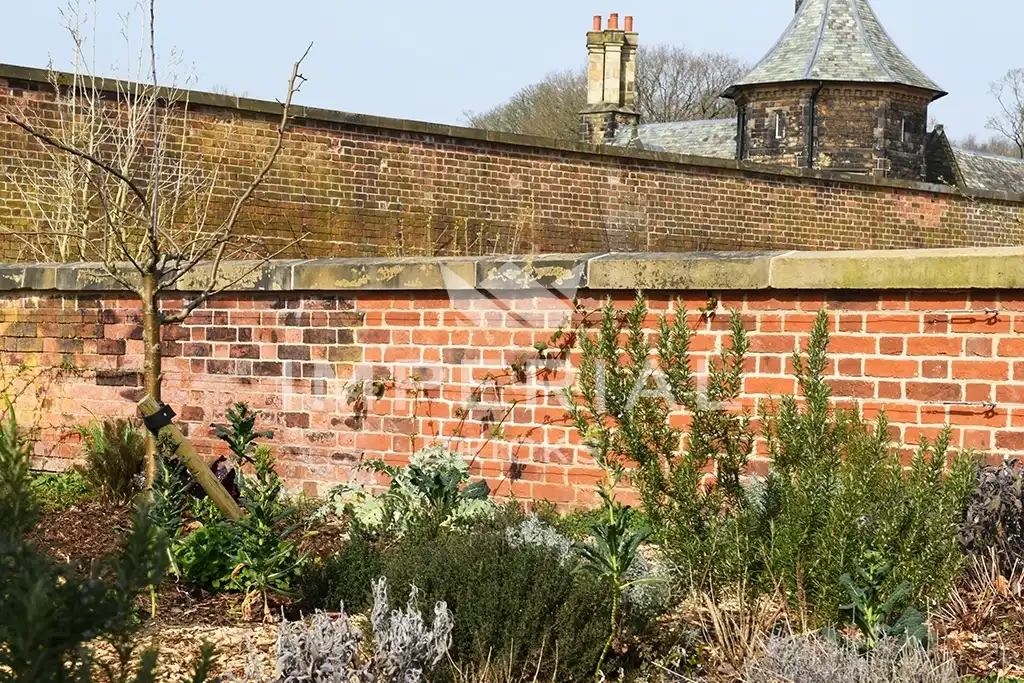
New country-style handmade bricks were combined with salvaged bricks to create substantial, traditional walling which embraces the site’s heritage.
As facing bricks are considered decorative and there are many finishes and styles to choose from, they’re often used for exposed internal walls as well as external walls.
Two common ways to achieve this are:
Most modern buildings have cavity walls with an inner layer of blockwork, so exposing an existing wall is usually only possible in older properties. Even then, whether you can expose the brickwork depends on a few factors, such as the quality of the bricks (some internal walls were built using commons) and how the property is insulated.
With all that in mind, if you want the look of an exposed brick wall, it’s often easier to use brick slips.
Brick slips can be cut from the faces of full-size facing bricks and applied to internal walls in a similar way to tiles.
There are many suppliers who offer brick slips, and just like full-size facing bricks, there are many colours, styles and finishes to choose from.
A single-storey residential extension in Cheshire achieved an outside-to-inside feel by incorporating brick slips into the interior design.
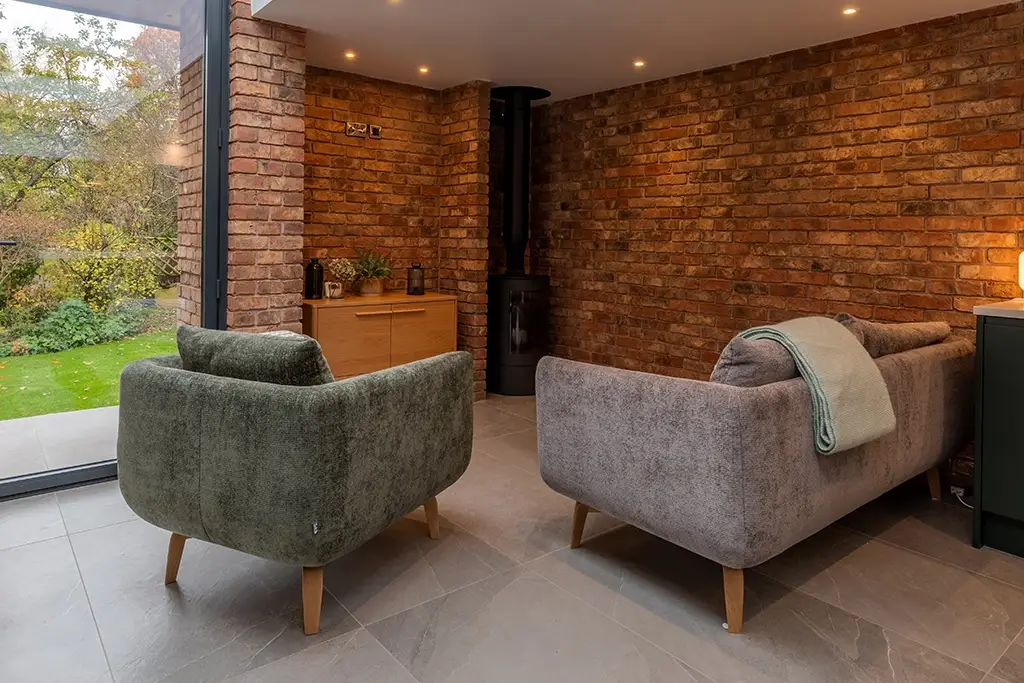
The same handmade bricks used for the exterior were cut into brick slips to create the look of an authentic exposed brick wall.
There are different types, sizes and price points for facing bricks which can make understanding them feel complex, so here’s a quick rundown of the basics.
There are two main types of facing bricks: handmade and machine-made.
Machine-made bricks are then further split into extruded and pressed categories. These are two different manufacturing methods which directly influence the brick’s texture and finish.
You can learn how each one is made and its typical characteristics in our types of bricks guide.
Facing brick sizes are usually split into three categories:
Metric is the most readily available off-the-shelf size, while imperial sizes are made to match historic brick measurements for renovation and extension work. Linear sizes can vary widely depending on the manufacturer and are usually reserved for contemporary brickwork.
The cost of facing bricks varies widely depending on their type, size and finish.
Prices range from around £500 per 1000 for plain extruded bricks to in excess of £3000 per 1000 for specialist handmade linears.
For an in-depth breakdown of how facing bricks are priced, read our cost of bricks guide.
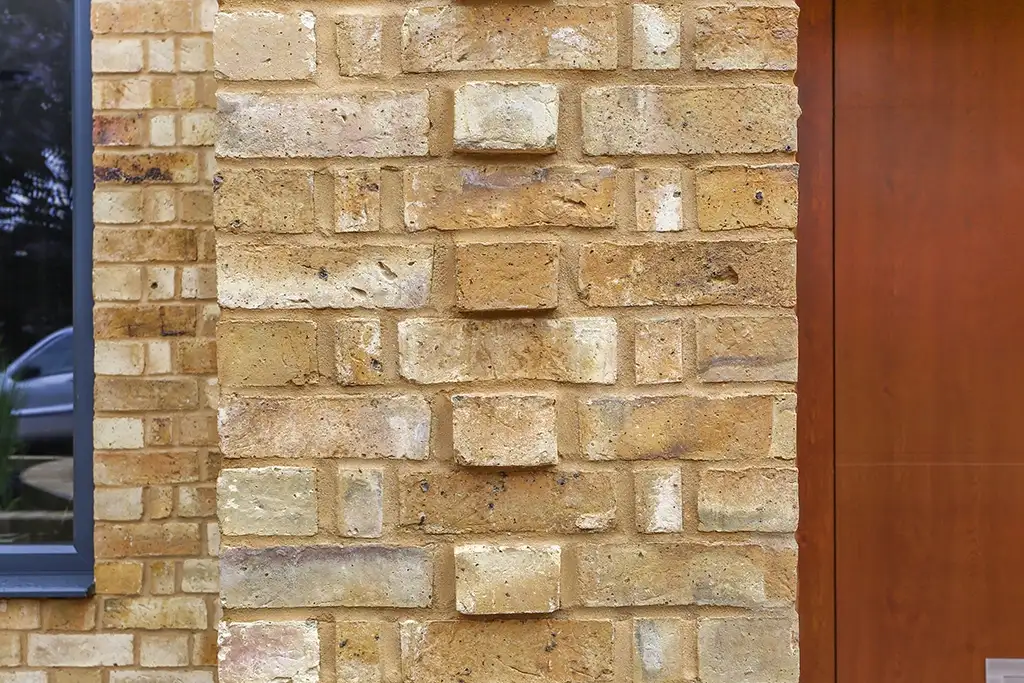
Search online for bricks and you’ll get thousands of results. Many of them are indeed facing bricks, but not all are made equal.
Bricks have different qualities that make them suitable (or not suitable in some cases) for your project, so before you get excited and rush off to order a load of samples, we’d recommend you scan this checklist to ensure the bricks you fall in love with are going to last long-term.
| Meaning | Check | |
| Frost Resistance | How well bricks cope with freeze-thaw cycles when wet | F2 rated for most external walls
F1 suitable for heavily sheltered, covered, or internal brickwork |
| Soluble Salts | The amount of natural salt content | S2 for low salt content
S1 is common for lighter colour bricks |
| Compressive Strength | The average load the brick can bear | The N/mm² measurement meets the minimum specified by the architect |
| Water Absorption | How much water the brick absorbs | Percentage rating is low enough for intended use |
If these seem a little technical, don’t worry; we’ll break them down and explain them simply. Once you understand, all you’ll need to do is check if the brick’s technical data meets what your architect specified before you order samples. This is usually found directly on a product page or as a downloadable PDF file.
Frost resistance is tested by subjecting a panel of bricks to repeated freeze-thaw cycles under controlled conditions.
After testing, bricks receive an ‘F’ rating between 0-2:
If you check nothing else, make sure the facing bricks you want to use for your external walls are F2 rated for frost resistance. It indicates their suitability for long-term exposure to wind-driven rain and freezing temperatures, which in the UK climate is unavoidable.
Alternatively, if you’re building a heavily sheltered or internal wall, you can use facing bricks with an F1 rating.
A soluble salts rating indicates the salt content within a brick. Salts occur naturally in clay, and some colours contain more than others.
After brickwork is built, saturation from rainwater can contribute to the movement of these salts within the bricks. If they make their way to the surface, they can form a white powder-like substance on the face of the brickwork known as efflorescence.
You may have seen it before and not known what it is, but it’s usually harmless and treatable.
Similar to frost resistance, soluble salt is rated on a scale of 0-2:
In practical terms, this rating indicates the risk of salts leaching out to cause efflorescence on the brick surface or affecting surrounding mortar.
For most red and orange bricks, their soluble salt content is on the lower end of the scale, while light colour clays such as yellows and buffs can sometimes contain more.
Ideally, you want facing bricks with an S2 rating for most external walls. If, however, you choose an S1 rated brick, just be aware they can be more susceptible to efflorescence and could require surface treatment later down the line.
Compressive strength is pretty self-explanatory; it’s measured in N/mm² and indicates how much compressive force a brick can withstand per unit area before failing.
For clay facing bricks, you should expect the compressive strength value to be somewhere between 9 and 30+ N/mm².
When considering bricks for most projects this isn’t something you need to be too concerned about. As a general guide, handmade bricks sit at the lower end of the scale, while extruded and pressed bricks are higher.
Water absorption measures how much water a brick takes on. It’s indicated by a percentage rating; the lower the percentage, the less water a brick absorbs when saturated. The value will differ depending on the brick type, but facing bricks are often below a 25% absorption rate.
For standard masonry, damp proof coursing helps prevent moisture rising from the ground beneath into the wall above, so don’t be put off if the percentage is on the higher side. For extremely exposed brickwork such as garden and boundary walls, bricks with a higher percentage rating may need extra protection from saturation, such as using engineering bricks at ground level and adding coping to the wall tops.
You should always order samples before committing to a full order of facing bricks, but here are a few tips to keep in mind.
Facing bricks come in varied surface finishes. They can be plain or treated to appear aged and weathered. Because you typically only see one side and one end of the bricks on the wall of a building, you’ll sometimes find bricks that only have the finish applied to one stretcher (long side) and one header (short end).
This can sometimes catch people out when building a small single skin garden or boundary wall. A single skin wall is one brick wide (102.5mm in metric size), so both sides of the brick will be on show.
If you choose a plain, solid colour brick, or one with a repeating pattern, this shouldn’t be a problem. But if you decide on a brick with a varied finish, the two sides may not match, so you’ll need to check this beforehand.
As an example, our dual-faced bricks are designed to have a different finish on each side, allowing you to customise the finish on-site by turning them around,
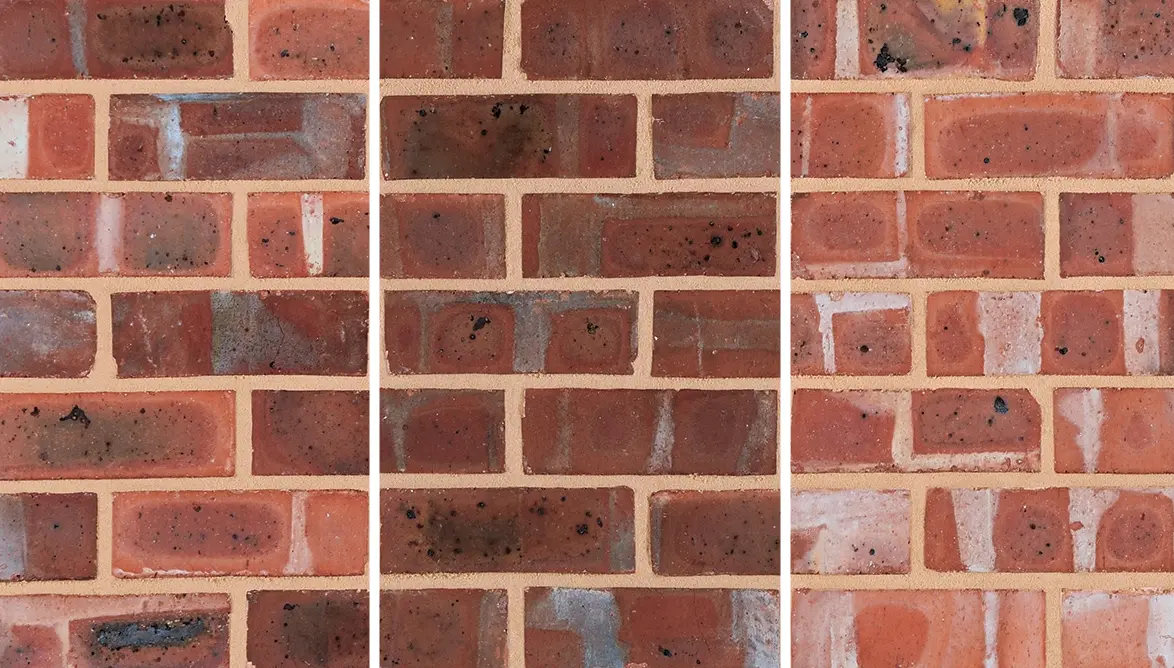
Above: Example of three different blends which can be achieved with dual-faced bricks.
If you were planning, say, an all-weathered finish with these bricks, you’d need to get them custom-weathered or choose an alternative brick if you want each side to match.
Matching new bricks to old brickwork can be difficult, especially if the old bricks are showing the effects of decades of weathering and ageing.
If you want to tackle this yourself, you can learn how to match bricks. It just takes a little time and research. Otherwise, you can always hand the task over to someone else. We wouldn’t blame you, as you have enough to plan and think about with a building project!
Many brick suppliers offer a free brick matching service where they’ll assess your existing brickwork and use their knowledge and expertise to match the old bricks for you. It saves you the time and potential headache of having to examine lots of different bricks.

Once you’ve narrowed down your brick choice, we highly recommend ordering a square metre quantity (60 metric bricks) to build a sample panel on site.
The panel is best built a few metres away from the foundations and with the same mortar you intend to use. This allows you to check what the bricks look like in both natural daylight and under cloud cover, to make sure you’re 100% happy with them.
We’ve covered a lot at this point, but we’ll run through a few FAQs that may be helpful to you.
The difference between facing bricks and common bricks is their quality, appearance, usage and cost. Facing bricks are used for exterior walls so are manufactured in attractive colours and finishes, and can withstand long-term exposure to rain and freeze-thaw cycles.
Common bricks, on the other hand, are mostly used for internal walls. They’re generally of a lesser quality, are typically an orange or red colour with shade variations and banding, and tend to be cheaper to purchase in larger quantities.
It’s worth noting that some manufacturers produce common-style facing bricks, so always check a product’s test results for suitability before purchasing.
There are three main types of facing bricks: handmade, extruded and pressed. Handmade and made by moulding and shaping clay by hand, while extruded and pressed are machine-made. The manufacturing method influences each type’s overall finish and texture.
To learn how each one gets its characteristics, our types of bricks guide explains all.
The standard size for a facing brick in the UK is 215 x 102.5 x 65mm.
To match older brickwork built prior to the introduction of the metric size, imperial bricks are often available in sizes such as 228 x 108 x 68mm and 228 x 108 x 73mm.
Additionally, some suppliers offer a ‘hybrid’ size of 215 x 102.5 x 73mm. This features a metric length and width with an imperial height, enabling the bricks to be easily incorporated into modern blockwork.
If you have your project design in hand and you’re eager to get going with your brick search, here’s a quick recap of what to check to make sure you’re ordering quality facing bricks which will perform for decades to come:
Exterior Walls:
Garden and Boundary Walls:
Providing the bricks meet these basic criteria, plus any requirements your architect may have specified, get ordering those samples!
Remember, on-screen colours will never perfectly match real-life clay colours, so always compare a few different options. If you’re struggling, you can always approach suppliers or local merchants for help.
If you’re interested in traditional bricks, we offer a wide range of handmade and machine made facing bricks in various colours, sizes and finishes.
Alternatively, if it all feels a little overwhelming and you’d rather someone took the task off your plate, contact us with your project requirements or request a free brick match. We’d be delighted to help.